Table of Contents
ToggleA home office without proper storage is like a workshop without a tool chest, you’ll spend more time hunting for paperwork than actually working. Whether you’re managing client files, tax records, or project documentation, a filing cabinet isn’t just furniture: it’s a productivity tool. The right cabinet keeps your workspace organized, protects important documents, and creates a professional environment whether clients visit or you’re on video calls. This guide walks you through selecting, sizing, and organizing a filing cabinet that fits your home office workflow.
Key Takeaways
- A filing cabinet is a productivity tool essential to any home office, keeping documents organized and accessible while establishing a professional environment for video calls and client visits.
- Lateral filing cabinets are the better choice for home offices because they fit tight spaces efficiently, double as work surfaces, and look less corporate than tall vertical models.
- Start with a 2-drawer lateral cabinet if you maintain 3–5 years of personal and tax records; most homeowners overestimate their storage needs and rarely require more than 4 drawers.
- Organize your filing cabinet using hanging folders with specific labels (avoid vague categories), dedicating separate drawers to active files, household records, and archives for maximum searchability.
- Anchor any cabinet taller than 24 inches to the wall to prevent tip-over hazards, especially in households with children or in earthquake-prone areas.
- Pair your filing cabinet with complementary home office furniture like bookshelves and desks for a cohesive, professional look that boosts both productivity and organization satisfaction.
Why a Filing Cabinet Is Essential for Your Home Office
Remote work has blurred the line between casual workspace and professional office, making storage a critical component of productivity. A dedicated filing cabinet serves multiple purposes beyond just holding papers. It establishes a visual boundary between work and home, signals professionalism during video calls, and, most importantly, creates a system where you actually know where your documents are.
Digital-first workflows often leave homeowners thinking a filing cabinet is obsolete. But tax returns, contracts, insurance documents, and receipts still require physical storage. Without a proper cabinet, these papers migrate to desk drawers, cardboard boxes, or worse, scattered across shelves. A well-organized filing system reduces stress, saves you hours of searching, and ensures critical documents are accessible when needed.
Secondary benefits matter too. Filing cabinets anchor a workspace aesthetically, provide additional surface area for desk lamps or small decor, and can be integrated into broader storage strategies alongside Home Office Built In Office Cabinets for a cohesive look. They also protect documents from dust, accidental spills, and prying eyes, important for client confidentiality or sensitive family records.
Types of Filing Cabinets and Which One Suits Your Needs
Lateral and Vertical Filing Cabinets
Lateral cabinets dominate home office spaces because they’re efficient and look less institutional than their tall, narrow counterparts. These sit about 30 to 36 inches wide (actual width typically 28–34 inches, depending on the frame), 18 inches deep, and come in 2-drawer, 4-drawer, and 5-drawer configurations. Lateral cabinets pull open like a standard dresser drawer, so a 36-inch cabinet needs only 18 inches of depth to fully open, ideal for tight home offices.
Vertical cabinets are the classic file cabinet look: tall, narrow (about 13–15 inches wide), and 24 to 28 inches deep. Files slide out perpendicular to the room, so they’re space-efficient width-wise but demand more clearance depth. Verticals work in corners or alcoves and suit smaller documents, but they’re harder to stack papers on top and take longer to search through when your office gets busy.
Lateral cabinets are usually the better choice for home offices because they feel less corporate, double as surfaces, and waste less floor space. Modern Home Office Desks pair well with lateral cabinets since both favor open, uncluttered layouts.
Specialty Options: Mobile and Modular Solutions
If your home office shares space with a bedroom or serves dual purposes, a mobile filing cabinet (on casters or wheels) offers flexibility. These are typically 3-drawer units about 20 inches wide, light enough to move, and storable in a closet or against a wall when not in use. The trade-off: they’re smaller and less stable than fixed cabinets, especially in households with active pets or kids.
Modular Home Office Furniture systems sometimes include filing components that stack or interlock, creating custom configurations. Modular pieces are ideal if you’re renting or renovating, but they’re pricier and may not align with your exact needs, make sure any modular system you choose handles the weight of filled file drawers (a standard 4-drawer lateral can weigh 200+ pounds when full).
Choosing the Right Size and Style for Your Space
Measure twice, buy once. Start by assessing how many documents you actually store. If you keep 3–5 years of personal files, tax records, and household paperwork, a 2-drawer lateral cabinet (30–36 inches wide) is usually sufficient. Most homeowners overestimate their storage needs: a 4-drawer lateral is rarely full in a home office unless you’re running a business with client archives.
Consider your office layout and traffic flow. A cabinet placed beside a desk becomes a workspace extension: the same cabinet blocking an entryway creates friction every time you leave the room. Aim for placement where the drawer pulls away from your body and doesn’t obstruct walkways or door swings. Standard drawer depth is 15 to 18 inches, so account for that swing radius.
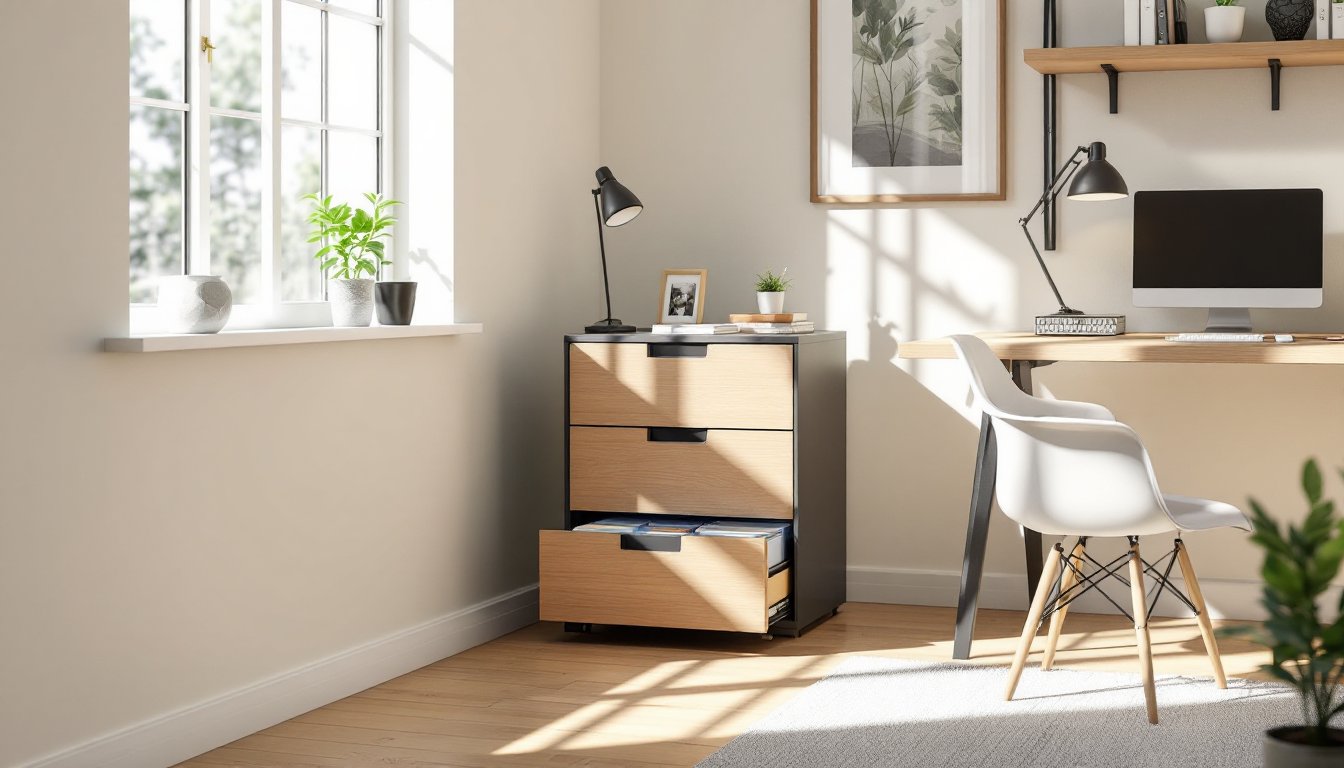
Style matters more in a home office than a commercial one because you see it daily and it influences your mental workspace. A wood lateral cabinet with natural finishes or painted panels integrates smoothly with residential decor and pairs well with Home Office Bookshelves for a curated look. Metal cabinets (steel in black, gray, or color) work for industrial or modern spaces. Avoid cheap particleboard units with thin veneers, they sag when full and look flimsy within a year.
If your office style leans contemporary, consider cabinets with clean lines, minimal hardware, and integrated handles rather than protruding pulls. A Modern Black Home Office benefits from a cabinet that matches the dark aesthetic without overwhelming the space. Wood cabinets in light stains work in brighter, coastal-inspired spaces. Your filing cabinet is visible real estate: choose one that you won’t resent looking at daily.
Installation and Organization Best Practices
Most lateral filing cabinets arrive fully assembled or require only drawer insertion, but check weight limits before installation. A loaded 4-drawer lateral on a carpet can sink and become difficult to open: use shims or a thin plywood base if your floor is uneven. On hardwood, place felt pads under all feet to prevent scratching and allow smooth sliding when you open drawers.
Anchor the cabinet to the wall if it’s taller than 24 inches, especially in households with children or earthquakes are a concern (most building codes recommend this for cabinets over 36 inches tall). Use lag bolts into studs or heavy-duty wall anchors if studs don’t align. This takes 20 minutes and prevents tip-over hazards.
Organization systems vary, but a simple structure works best: dedicate one drawer to current/active files (client projects, ongoing tasks), one to household records (insurance, utilities, warranties), and one to archives (tax returns, closed projects). Use hanging folders with clear labels, not loose papers stuffed into drawers. Hanging frames sit inside the drawer and keep folders upright and searchable.
Label-making is non-negotiable. Print labels on a label maker or write clearly with a permanent marker. Vague category names (“Misc,” “Documents,” “Stuff”) defeat the purpose: use specific labels like “2024 Tax Documents,” “Home Warranty,” or “Client XYZ – 2025.” Your future self will thank you when you need a document in three months.
Many home office storage decisions work better when integrated with complementary pieces. Research shows that homes with cohesive Home Office Bookcase systems paired with filing storage report higher productivity and organization satisfaction. Similarly, external sources like Real Simple’s filing cabinet reviews provide independent guidance on durability and functionality. Some DIYers explore DIY modifications to standard cabinets, IKEA’s Helmer cabinet hacks demonstrate how budget-friendly bases can be customized with added hardware, paint, or legs to match your office aesthetic.
Conclusion
A filing cabinet transforms a chaotic home office into a functional, professional workspace. The right cabinet, chosen for size, style, and durability, pays dividends in productivity and peace of mind. Invest time in setup and labeling, anchor it properly, and you’ll have a storage system that lasts years and actually gets used. Your documents, your schedule, and your sanity will all benefit.