Table of Contents
ToggleIf you’re spending eight-plus hours a day sitting in a chair that was never meant for work, your back probably has some strong opinions about that. The right office chair isn’t a luxury, it’s the foundation of a productive, pain-free workday at home. Unlike the folding kitchen chair or that ancient gaming throne collecting dust, a proper home office chair balances ergonomic support, durability, and the kind of comfort that lets you focus on actual work instead of your aching spine. This guide walks you through what matters when choosing a chair that’ll serve you well for years to come.
Key Takeaways
- The best office chair for home office combines ergonomic support, adjustability, and durability to prevent back pain and boost productivity during long work sessions.
- Prioritize adjustable lumbar support, a high-density foam seat with a waterfall edge, and adjustable armrests that allow proper 90-degree knee bend and aligned elbows.
- Mesh fabric provides better breathability than leather, while a five-star base with quality casters and a gas cylinder rated for at least 250–300 pounds ensures stability and longevity.
- Mid-range chairs ($300–$800) typically offer the best value for full-time remote workers, balancing better foam quality and frame durability without the premium price tag.
- Match your office chair’s color and style to your workspace aesthetic and desk design, as its appearance on video calls affects the professionalism of your home office presence.
Why Your Office Chair Matters More Than You Think
Your office chair isn’t just furniture, it’s infrastructure for your health and productivity. Poor seating causes back pain, neck strain, and fatigue that compounds over hours and weeks. A worn-out chair forces your body into compromise positions, which eventually leads to chronic discomfort that follows you beyond work hours.
When you’re sitting correctly in a chair designed for your body, you can concentrate on the task at hand instead of shifting every five minutes to find a comfortable spot. Good posture improves circulation, reduces muscle tension, and, research shows, actually boosts focus and output. Since you spend roughly 40–50 hours a week in your office chair, the investment in a quality seat pays dividends in comfort and work quality.
Beyond personal health, the right chair signals that your workspace is serious about productivity. Whether you’re on client video calls or hosting virtual meetings, a professional-looking chair contributes to the overall impression of your home office.
Key Features To Look For In A Home Office Chair
Ergonomic Support And Adjustability
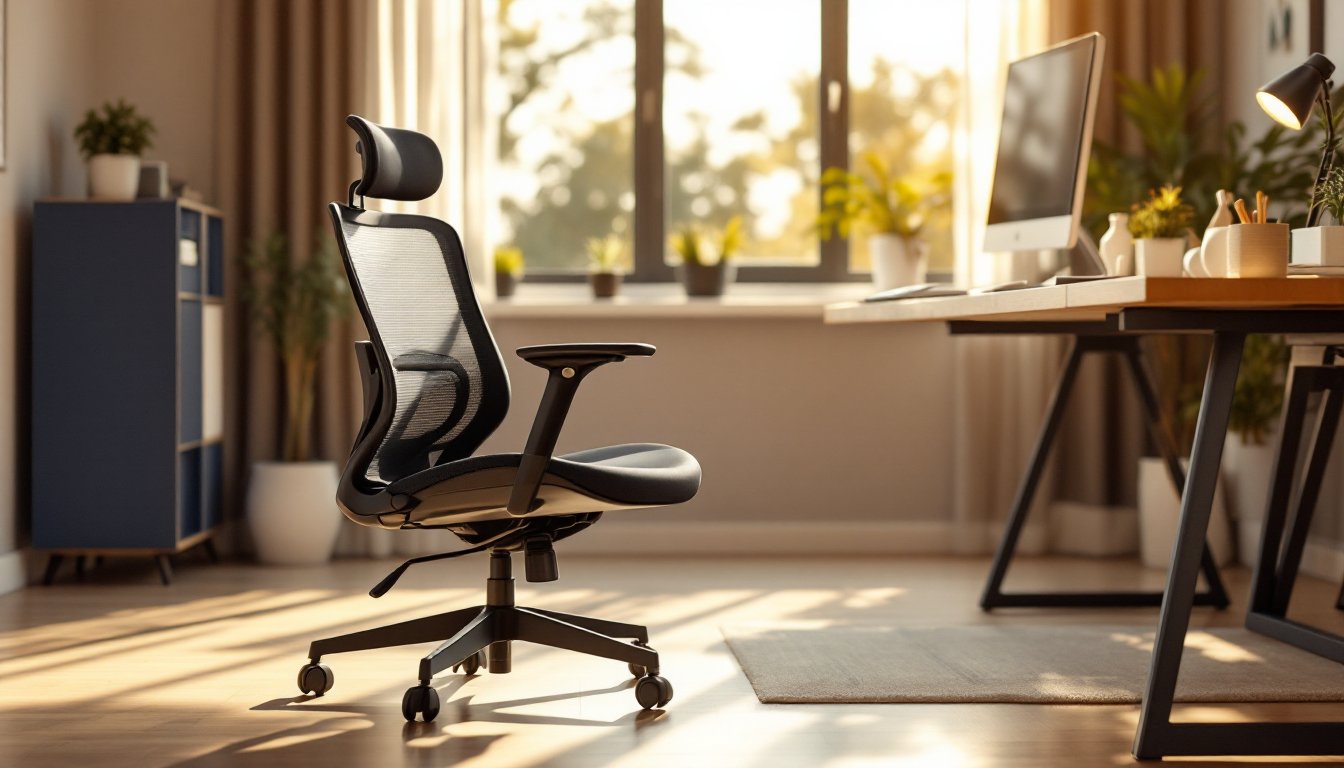
Adjustability is non-negotiable. A chair’s seat height should allow your feet to rest flat on the floor with your knees bent at roughly 90 degrees. Your elbows should align at roughly the same height as your desk, with shoulders relaxed and arms at a natural angle.
Look for a chair with a high-density foam seat that retains its shape, cheap foam compresses within months and becomes a limp pancake. A waterfall edge (curved seat front) reduces pressure on the backs of your thighs. Lumbar support, either built-in or adjustable, is critical for lower back alignment: many chairs let you adjust lumbar depth and firmness to match your natural spine curve.
Armrests matter more than many assume. Adjustable armrests at the right height prevent shoulder hunching and reduce strain on your rotator cuff. Some chairs let you flip armrests up entirely if you prefer an unobstructed desk edge. A headrest or neck support becomes increasingly important if you spend significant time on video calls.
Tilt tension and recline range also deserve attention. You should be able to adjust how easily the chair tilts, too loose feels unstable, too tight makes movement difficult. A recline range of 100–130 degrees gives flexibility for varied work postures without tipping into nap territory.
Material And Build Quality
Mesh fabric breathes better than leather and doesn’t trap heat during long sessions, making it ideal for year-round comfort. Leather looks polished but requires maintenance and can feel clammy in summer. Blended upholstery (mesh with padded sides) offers a middle ground, aesthetic appeal with better airflow.
The base and casters matter too. A five-star base with smooth-rolling casters spreads your weight evenly and prevents tip-over risk. Heavy-duty casters designed for your flooring type (hardwood, tile, or carpet) make movement smooth. A gas cylinder rated for your weight ensures smooth height adjustment and prevents sudden collapse, look for chairs rated for at least 250–300 pounds unless you need a heavier-duty model.
Frame construction separates durable chairs from ones that creak and loosen after a year. Welded steel frames outlast plastic-jointed bases, though they add weight. Check reviews specifically for longevity complaints, manufacturing defects show up quickly when dozens of users report the same problem.
Budget Considerations And Value
Office chair pricing ranges from $150 to $2,000-plus, and the relationship between cost and quality isn’t always linear. A $300 mid-range chair often delivers better value than a $500 “gaming” chair designed more for aesthetics than ergonomics.
Budget chairs ($150–$300) cover the basics: adjustable height, tilt, and lumbar support. They work for occasional home use but may feel loose or uncomfortable after 2–3 years of daily sitting. Mid-range chairs ($300–$800) invest in better foam, adjustability options, and frame durability, this is where most professionals find their sweet spot. Premium chairs ($800+) add features like fully adjustable lumbar support, advanced tilt mechanisms, and high-end materials, justified if you’re spending 8+ hours daily or have specific physical needs.
Don’t confuse “expensive” with “good.” Many pricey gaming chairs sacrifice posture support for aggressive styling. Read reviews that specifically mention comfort after extended use, not just first impressions. Compare warranty length, a 5–10 year warranty suggests the manufacturer believes in the product’s durability.
The 11 best desk chairs for home offices reviewed by industry experts offer reference points across price ranges. Consider your actual use: if you work from home part-time, a solid mid-range chair makes sense. If you’re a full-time remote worker with back issues, the investment in a premium ergonomic chair pays for itself in healthcare costs avoided.
Styling Your Chair To Match Your Home Office Aesthetic
Your office chair doesn’t have to disappear into the background, and it shouldn’t dominate the room either. The key is choosing a style that complements your workspace without clashing.
For a modern black home office, a sleek black mesh or leather chair creates seamless continuity. For spaces with warmer tones, gray, navy, or tan upholstery bridges the gap between professional and inviting. Bold colors, racing red, deep blue, work if they’re already in your palette: otherwise, they feel out of place fast.
Consider your desk style. A minimalist standing desk pairs well with an understated ergonomic chair in neutral tones. A modern home office desk with clean lines benefits from a chair with similarly sharp geometry. Conversely, a traditional wooden desk can accommodate a leather-upholstered chair with rolled armrests.
A modular home office furniture setup allows you to swap chairs as your space evolves. If you’re planning a refresh, coordinate your chair choice with storage solutions, a chair in the same color family as your home office bookcase creates visual cohesion.
One practical note: if you host video calls regularly, your chair’s appearance on camera matters. Test how it looks on screen during a meeting. A well-fitted chair in a neutral color projects professionalism: a ratty office chair reads as neglected, even if it’s comfortable.
Conclusion
The best office chair for your home office is the one that fits your body, supports your work habits, and aligns with your budget and aesthetic preferences. Prioritize adjustability and long-term comfort over trendy design or brand names. Test before buying if possible, visit a showroom or order from retailers with generous return policies. Your future self, sitting through hours of focused work without back pain, will thank you for the investment.