Table of Contents
ToggleIf you’re furnishing a home office or updating a workspace, a criss cross office chair with arms might be exactly what you need. These chairs blend contemporary design with practical comfort, offering a visually striking silhouette while keeping your shoulders supported during long work sessions. Unlike traditional task chairs that disappear into the background, a criss cross design makes a statement, think of an X-frame base that feels modern without requiring you to sacrifice functionality. Whether you’re upgrading from an old desk chair or building out a new office from scratch, this guide walks you through what sets these chairs apart, why they’re worth considering, and how to pick one that actually fits your space and body.
Key Takeaways
- A criss cross office chair with arms combines mid-century modern aesthetics with ergonomic functionality, featuring an X-shaped base that’s surprisingly stable and more visually intentional than traditional task chairs.
- Proper armrest positioning is critical—armrests should align with your seated elbows and reduce shoulder strain during long work sessions, making them essential ergonomic support rather than a luxury.
- Choose hardwood X-frames (oak, walnut, or beech) and breathable fabric upholstery with 2.0–2.5 pounds per cubic foot foam density for durability and comfort during extended daily use.
- Fixed armrests work well for standard desk heights (28–30 inches), while adjustable armrests suit flexible workspaces; verify armrest height so your elbows sit directly under your shoulders without hunching.
- Before purchasing, measure your desk height and clearance, ensure the seat height is 16–18 inches, and position your monitor at eye level—these setup details make the difference between a beautiful chair and a truly comfortable one.
What Is a Criss Cross Office Chair?
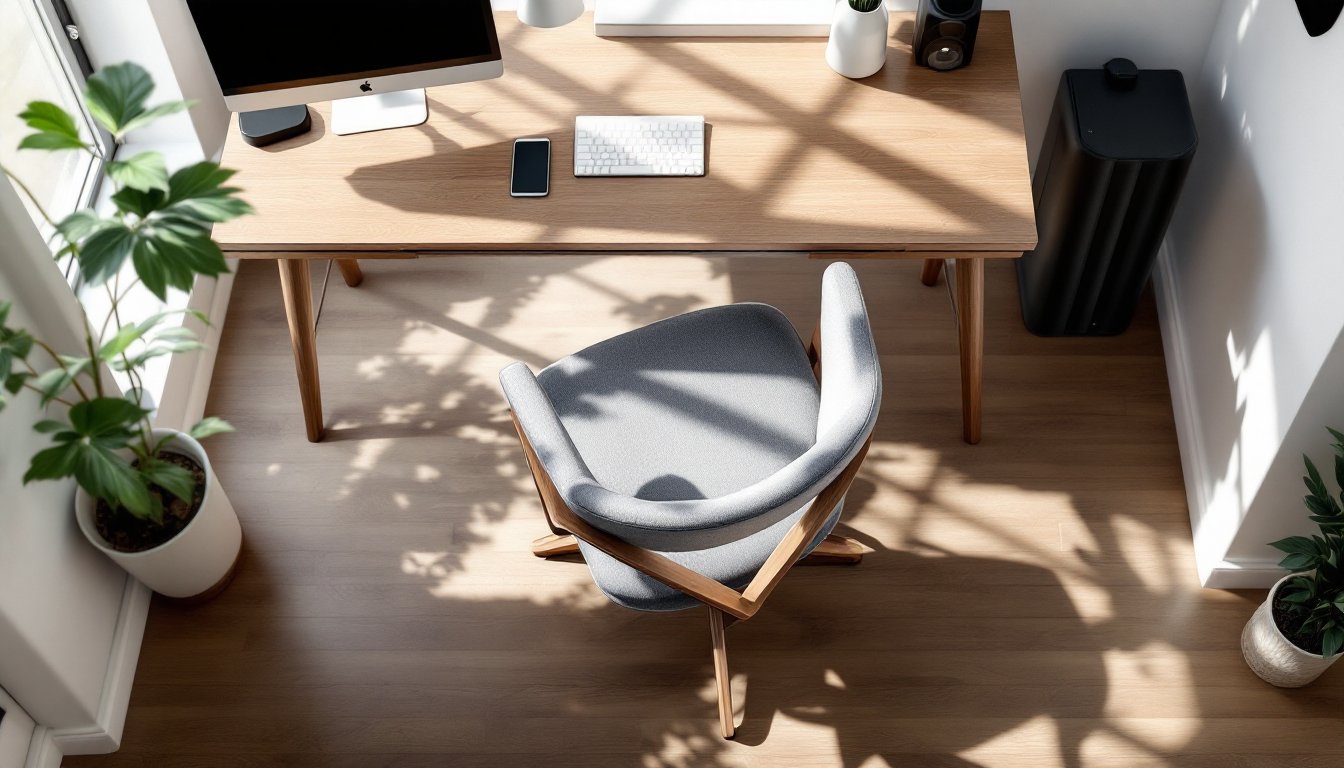
A criss cross office chair features an X-shaped base, typically made of wood, metal, or a combination of both, where two structural supports cross at the center and splay outward to the floor. This contrasts with the traditional five-wheel base you see on most office chairs. The criss cross (or X-frame) design draws inspiration from mid-century modern furniture and campaign-style pieces, giving your workspace an intentional, curated look.
What makes these chairs distinct isn’t just the base. They’re often lighter than conventional task chairs, more stable than you’d expect from that narrow footprint, and they move differently, many pivot or swivel on a central post rather than gliding across casters. Some models offer wheels for mobility, while others remain stationary for a cleaner aesthetic.
The addition of armrests transforms a criss cross chair from purely decorative into something genuinely functional for eight-hour workdays. Arms that are properly positioned reduce shoulder strain and give you somewhere to rest between focused work blocks. They’re not just a luxury, they’re ergonomic insurance.
Why Choose a Criss Cross Design With Armrests?
Criss cross office chairs with arms hit a sweet spot between aesthetics and ergonomics that standard office chairs often miss. First, they look intentional. A bulky mesh office chair shouts “I work from home,” while a thoughtfully designed criss cross chair whispers “my space matters.” This matters more than you’d think if you host video calls or welcome clients into your office.
Second, the X-frame geometry is surprisingly stable. The splayed base distributes your weight efficiently and resists tipping better than narrow pedestals. Beginners sometimes worry that crossing elements means less stability, the opposite is true. When properly engineered, the base acts like a tent: the wider the angle, the better it anchors.
Third, armrests on these chairs serve a real function. Many criss cross designs keep arms at a consistent height relative to the seat, which is harder to achieve on chairs with height-adjustable bases. This consistency means your shoulders stay in the same plane throughout the day. Research on office ergonomics consistently shows that armrest use reduces neck and shoulder tension, especially during typing-heavy work. And beyond comfort: armrests prevent you from habitually hunching inward to rest your elbows on the desk itself.
Key Features to Look For
Material and Build Quality
The X-frame itself should be your first inspection point. Solid wood, typically hardwood like oak, walnut, or beech, offers durability and a finished appearance. A 1.5″ to 2″ diameter hardwood post at the pivot point is standard. Avoid laminated or particle board bases if the chair will see daily use: they compress and develop wobble over time.
If you prefer a lighter footprint, metal X-frames (steel or aluminum) are common, especially in contemporary designs. Steel is heavier and feels more planted: aluminum is feather-light but less forgiving if you rock back aggressively. Make sure welds are clean and uniform, welded seams are stronger than bolted connections under repetitive stress.
For the seat itself, upholstery matters. Breathable fabric (like cotton blends or performance fabrics) beats pleather if you sit for more than six hours daily. Pleather sweats and cracks: quality fabric holds up and feels better against your back. Check the foam density under the cushion: 2.0–2.5 pounds per cubic foot is the sweet spot for long-term comfort without bottoming out.
The seat pan should be slightly contoured, completely flat pans encourage slouching. Look for a subtle depression that cups your sitting bones without feeling “bucket-y.” Most quality office chairs measure 17–19 inches deep and 16–18 inches wide.
Armrest Design and Adjustability
Armrests on criss cross chairs come in two flavors: fixed and adjustable. Fixed armrests sit at a predetermined height (usually 7–9 inches above the seat) and never change. They’re simpler, cheaper, and they don’t develop the wobbly joints that plague adjustable versions. For someone with a standard desk height (28–30 inches), a fixed armrest at a proper height works beautifully.
Adjustable armrests let you fine-tune height and sometimes width. If you share a workspace or switch between sitting and standing desks, adjustability pays off. But, every moving joint is a potential failure point. The mechanisms should be smooth, lever or knob adjustments that don’t stick or require excessive force. Avoid armrests that rotate inward aggressively: they get in the way of getting close to your desk.
Armrest length is worth considering. Longer arms (20+ inches) give more surface area for your forearms, especially useful if you work with a keyboard and mouse spread wide. Shorter arms (14–16 inches) work better if you’re close to your desk or in a tight space. The top surface should be padded, wood or metal alone feels clinical and your arms will slide off during extended work sessions.
One practical test: sit in the chair with your feet flat and arms at rest. Your elbows should sit directly under your shoulders, with your forearms hovering slightly above the armrests. If the armrests are too high, they’ll hike your shoulders: too low, and you’ll hunch forward. Getting this right prevents a full day of creeping tension.
How to Integrate a Criss Cross Chair Into Your Home Office
Before you bring a criss cross office chair home, think about your office layout. These chairs command visual attention, that’s their strength and their challenge. A busy, already-cluttered office amplifies the effect. A clean, minimal space lets the chair breathe.
Flooring matters. If your office has hard flooring (wood, tile, laminate), the chair’s base will show scratches quickly. Felt pads on the base feet protect both the chair and floor. If the chair has casters, use a chair mat to prevent scuffing and make rolling smoother. But many criss cross designs don’t roll, they’re meant to pivot in place. Know which type you’re buying: it changes how you’ll position the chair relative to your desk.
For desk compatibility, measure twice. The chair should slip under your desk fully when pushed back, so you’re not constantly tugging it out of the way. Criss cross bases are usually narrower than five-wheel bases, so clearance is less of an issue, but verify it anyway. Standard desk height is 28–30 inches: your chair’s seat should be 16–18 inches high when adjusted properly. This gives you a 10–14 inch gap between your thighs and the underside of the desk.
Color and finish should echo your desk and storage pieces. A walnut X-frame chair pairs beautifully with mid-century modern or scandinavian-style desks. A white or light gray metal base works with minimalist setups. Seat upholstery is the wild card, neutral tones (charcoal, tan, light gray) hide dust and stains better than brights, and they pair with nearly any decor. If you want a pop of color, keep the base understated.
Don’t forget task lighting and monitor positioning. A great chair is wasted if your monitor forces you to crane your neck or your back isn’t getting support from a proper lumbar situation. Your eyes should be level with the top third of your monitor, roughly 20–26 inches away. Armrests should be low enough that your elbows have a slight bend (not locked straight) when your hands rest on the keyboard.
Consider pairing your criss cross chair with a document holder or monitor arm. These accessories, especially a monitor arm that frees up desk space, let you get closer to your desk and position yourself more ergonomically. Resources like The Handyman’s Daughter offer practical workspace setup guides if you’re building out your office from scratch.
Conclusion
A criss cross office chair with arms is more than a design statement, it’s a functional choice that rewards daily use. Focusing to frame quality, upholstery, and armrest positioning, you’ll find a chair that looks purposeful and feels comfortable through a full workday. The key is matching the chair to your space and workflow, not just your aesthetic. Measure your desk height, think about your flooring, and sit in the chair before committing. The right criss cross chair makes your office a place you actually want to spend time in.