Table of Contents
ToggleIf you’re spending eight hours a day staring at a screen from your home office, your chair matters more than you think. A black ergonomic office chair isn’t just about aesthetics, it’s an investment in your posture, productivity, and long-term spinal health. The right chair supports your back, reduces strain on your neck and shoulders, and keeps you comfortable through marathon work sessions and back-to-back video calls. With so many options flooding the market, knowing what separates a solid ergonomic chair from an overpriced dud can save you money and pain.
Key Takeaways
- A black ergonomic office chair supports proper spinal alignment and reduces back pain by maintaining your spine’s natural S-curve during long work sessions.
- Adjustable lumbar support, seat height, armrest positioning, and tilt mechanisms are essential features that separate quality ergonomic chairs from basic alternatives.
- Mid-range ergonomic chairs priced between $400–$600 offer the best value, delivering durability and comfort without the premium price tag of high-end models.
- Proper chair setup—including correct seat height, lumbar support adjustment, and monitor positioning—is just as important as the chair itself for preventing neck and shoulder strain.
- Black is an ideal color choice for home office chairs because it maintains a professional appearance, hides wear, and complements virtually any desk or decor style.
Why Ergonomic Design Matters for Your Home Office
Your spine is a delicate architecture. When you slouch or sit at the wrong angle for eight hours, you’re compounding stress on your lumbar vertebrae, discs, and the muscles that hold everything upright. Over time, poor seating habits lead to chronic back pain, shoulder tension, and even nerve issues that follow you long after you clock out.
Ergonomic seating redistributes your weight properly, keeping your pelvis stable and your spine in a neutral S-curve. This reduces muscle fatigue and keeps pressure off your intervertebral discs. The result? You move less in your chair (because you’re actually comfortable), you concentrate better, and you don’t limp away from your desk at day’s end.
The difference between a mediocre office chair and a genuinely ergonomic one boils down to intentional design: proper seat height, backrest angle, and support zones that match your body’s natural contours. A quality ergonomic chair adapts to you rather than forcing you to adapt to it.
Key Ergonomic Features to Look For
Lumbar Support and Spinal Alignment
This is the non-negotiable feature. Lumbar support refers to a curve in the lower backrest that matches the natural inward curve (lordosis) of your lumbar spine. Without it, your lower back flattens against the chair, forcing muscles to work overtime to keep you upright.
Look for chairs with adjustable lumbar support, a dial, lever, or strap that lets you move the support up, down, or in and out. Your lumbar curve sits roughly 1–2 inches above your hip line: the support should cradle that exact zone. A proper fit means your lower back doesn’t gap between you and the chair.
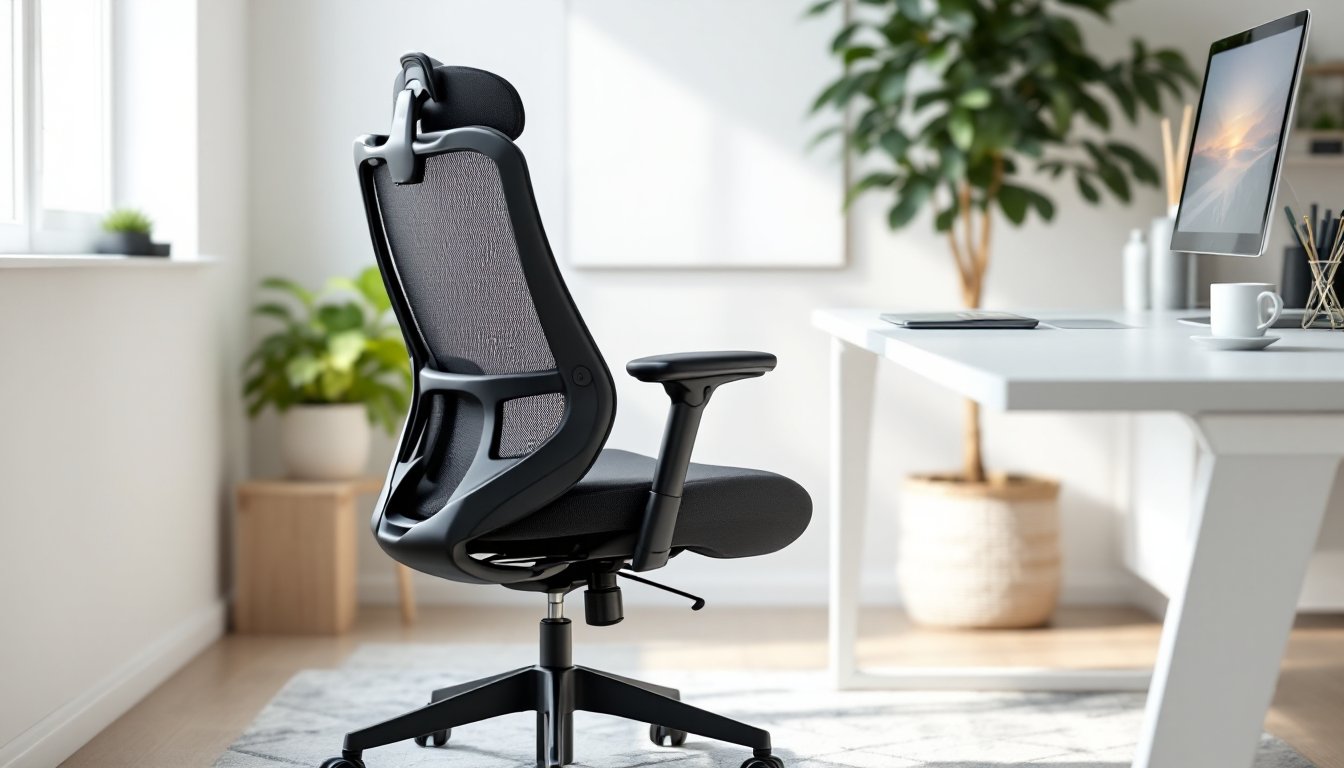
Spinal alignment also depends on headrest and armrest positioning. Many ergonomic chairs include a headrest that prevents your neck from jutting forward, a major culprit in tech neck and shoulder strain. Armrests should support your forearms at roughly 90 degrees, keeping your shoulders relaxed instead of shrugged.
Adjustability and Customization
Every body is different. A chair that’s perfect for someone 5’6″ won’t work for someone 6’2″. This is why adjustability separates ergonomic winners from one-size-fits-all duds.
Key adjustments to demand: seat height (pneumatic cylinder, typically 17–21 inches), backrest tilt and tension (so the back supports you as you recline), seat depth (shallow seats pinch behind your knees: deep ones don’t support your thighs properly), and armrest height and width. Premium ergonomic chairs often include tilt-lock mechanisms that let you fix the backrest angle once you find your sweet spot.
Don’t overlook base and wheel type, either. A five-point base is more stable than a four-point, and quality casters (wheels) roll smoothly without catching on carpet or hardwood. For hardwood floors, request polyurethane casters: for carpet, rubber works better.
Black as a Design Choice for Home Offices
Black is the default office color for good reason. It’s professional, it hides dust and wear, and it pairs with virtually any desk style or decor scheme. When you’re establishing a modern black home office, a black ergonomic chair anchors the space without demanding attention.
Beyond practicality, black reads as sophisticated and intentional, qualities that matter if you’re on video calls or expecting clients. It also works in transitional, contemporary, and industrial designs without looking dated. If your workspace features wood tones, whites, or metallics, a black chair grounds the composition.
The only real downside? Black fabric and mesh show fingerprints and pet hair easily, and darker leather can feel cold in poorly lit rooms. If that’s a concern, charcoal gray or dark blue offer similar visual weight with slightly more forgiving maintenance.
A modern black home office setup reinforces focus and professionalism, and your chair choice sets the tone for the whole environment. Quality matters because you’ll spend more hours in that chair than you will sitting on your sofa.
Budget-Friendly vs. Premium Options
Office chairs span a wild price range: $150 to $2,000+. The gap isn’t just marketing. Here’s where your money goes at different price points.
Under $300 (Budget-Friendly): You’ll find chairs with basic lumbar support, manual height adjustment, and mesh backs. They work for part-time home workers or students. But, adjustability is limited, and materials (foam, plastic, mesh) wear faster under daily use. Budget-friendly ergonomic chairs under $200 typically sacrifice build quality for affordability.
$300–$800 (Mid-Range): This tier brings better padding, more adjustment points, and materials that hold up longer. You’ll get adjustable armrests, tilt-lock mechanisms, and breathable mesh or fabric. If you’re working from home full-time, this is where ROI starts making sense. Many solid black ergonomic chairs land here.
$800+ (Premium): High-end chairs feature premium leather or specialized mesh, synchronized tilt mechanisms, lumbar pumps (air-filled support you dial in), and bases engineered for durability. You’re paying for years of comfort and components that won’t fail in three years. These chairs often come with extended warranties.
For most home office workers, a mid-range ergonomic chair ($400–$600) hits the sweet spot, enough features and durability to prevent back pain without overspending. Don’t confuse cost with quality: a $500 chair from a reputable brand beats a no-name $1,000 chair every time.
How to Set Up Your Chair for Maximum Comfort
Buying the right chair is step one. Setting it up correctly is step two, and most people skip it.
Start with seat height. Sit in the chair with your feet flat on the floor. Your knees should bend at roughly 90 degrees, and your hips should be level with or slightly higher than your knees. If your feet dangle, raise the chair: if your knees compress inward, lower it. This prevents pressure on the backs of your thighs.
Next, adjust lumbar support. Recline the backrest slightly (about 100–110 degrees), then dial in the lumbar support so it fills the gap at your lower back. It should feel supportive, not aggressive. Test it for ten minutes: you should feel cradled, not poked.
Then set armrest height. Your forearms should rest parallel to the floor when you’re typing. Armrests that are too high force your shoulders up: too low makes you lean inward. If your chair has adjustable armrests, spend time dialing them in, this reduces shoulder and neck strain more than people realize.
Finally, position your desk and monitor. Your monitor should sit at arm’s length away and at eye level when you look straight ahead (not down or up). Pair this with an ergonomic chair, and you’ve built a workspace that supports long work sessions. Many people on design platforms like Houzz document their home office setups: looking at real examples helps visualize proper positioning.