Table of Contents
ToggleA quality office chair is the foundation of any productive home workspace. If you’re spending six or more hours a day sitting, your chair matters, a lot. Black fabric office chairs have become the go-to choice for homeowners and professionals setting up home offices because they’re versatile enough to blend with any décor, easier to maintain than leather, and can deliver solid ergonomic support without breaking the budget. Whether you’re outfitting a dedicated office room or carving out a corner of your bedroom, understanding what makes a black fabric chair worth the investment will help you make a choice you won’t regret three months in.
Key Takeaways
- Black fabric office chairs are versatile, breathable, and 30-50% cheaper than leather alternatives while offering solid ergonomic support for productive home workspaces.
- Essential features to prioritize include a five-point base, seat depth of 16-17 inches, smooth pneumatic height adjustment, and a weight capacity of 250+ pounds for durability.
- Ergonomic support depends on contoured or adjustable lumbar support, height-adjustable armrests, proper tilt tension, and a seat height range of 17-21 inches to maintain healthy posture.
- Choose fabric with 12-15 ounces per square yard weight and tightly woven construction, and look for solution-dyed nylon treated with stain-resistance coating like Scotchgard.
- Regular maintenance including weekly vacuuming, immediate blotting of spills, and protection from direct sunlight will extend your black fabric chair’s lifespan and appearance.
- A well-designed black fabric office chair combines form and function—complementing your workspace aesthetic while supporting productivity and comfort for years of daily use.
Why Black Fabric Office Chairs Are the Perfect Home Office Choice
Black is the neutral that actually works. Unlike white, which shows dust and spills instantly, or bright colors that eventually clash with almost everything, black fabric wears gracefully and hides minor marks that come with daily use. It’s the chameleon of office furniture, equally at home in a minimalist workspace, a traditional study, or a modern professional studio.
Fabric chairs also breathe better than their leather counterparts, which matters if you live somewhere humid or spend long stretches sitting. Leather can feel tacky in summer and rigid in winter: fabric adapts. You won’t stick to it after an hour of focused work, and you won’t develop the lower-back heat that makes you stand up constantly to adjust your posture.
From a practical standpoint, black fabric office chairs typically cost 30 to 50 percent less than comparable leather models with the same ergonomic features. That price difference means you can invest in better lumbar support, adjustable armrests, or a higher-weight capacity without overshooting your budget. You’re getting legitimate comfort without the premium price tag of luxury materials.
For anyone setting up a modern black home office, the chair is often your second-largest expense after the desk itself. A good black fabric chair gives you flexibility, you can change your desk, your décor, even your workspace layout, and the chair will still fit the aesthetic.
Key Features to Look for in a Quality Black Fabric Chair
Not all office chairs are built the same, and black fabric ones run the gamut from gas-station-waiting-room uncomfortable to legitimately nice.
Start with the base. A five-point base is standard and stable: avoid three or four-point bases unless you’re in a very small space. Look for wheels rated for your floor type, hard casters for carpet, soft casters for hardwood or tile. A wobbly base defeats every other good feature.
The seat pan itself should be at least 16 to 17 inches wide and deep enough that you can fit two fingers between the edge and the back of your knees when you’re sitting. If it’s too shallow, your thighs hang off the edge, which cuts circulation and causes discomfort within an hour. If it’s too deep, it pushes your lower back away from the backrest, and you end up slouching.
Pneumatic height adjustment is non-negotiable. This is the gas cylinder that lets you raise or lower the seat. It should be smooth and hold your weight without sinking or creeping down over time. A chair that slowly deflates while you’re working is maddening and signals a weak cylinder, a sign the overall quality is questionable.
Weight capacity matters more than you’d think. Even if you’re on the lighter side, chairs rated for 250+ pounds tend to have sturdier frames and higher-quality components. They’ll last longer and feel more stable under normal use.
Ergonomic Support and Adjustability
Back support is where ergonomics actually live. Look for a backrest that’s contoured or has lumbar adjustment, even a simple lumbar pillow is better than a flat board. Your lower back curves inward naturally: a flat backrest ignores that curve and forces your spine into an unnatural position. Within a few hours, you’ll feel it in your shoulders and neck.
Adjustable lumbar support (usually a knob or lever on the back) lets you dial in the exact amount of support for your body. Not everyone’s spine curves the same way, so the ability to customize matters. Office chairs with ergonomic middle back support give you that flexibility at a reasonable price point.
Armrests should be adjustable, height and width at minimum, ideally also depth. Fixed armrests are almost worse than no armrests, because they’re rarely at the right height for your desk setup. Your upper arms should rest parallel to the floor when your hands are on your keyboard, not reaching up or pressed down. If armrests don’t adjust, skip them and go with a no-arm model.
Tilt tension is underrated. A good tilt mechanism lets you recline slightly without the chair feeling loose or unstable. You should be able to lock the backrest in an upright position for focused work, or adjust tilt tension so the chair responds smoothly to your weight shift when you lean back. A chair that either won’t recline or reclines too freely will frustrate you daily.
Seat height range matters, too. Standard range is 17 to 21 inches from the floor to the compressed seat surface. If you’re taller or shorter than average, or if your desk is unusually high or low, check the specs before buying. A chair that can’t reach the right height under your desk forces you into a compromised posture, and no amount of back support will fix that.
Fabric Types and Durability Considerations
Not all black fabrics are equal, and the weave, weight, and finish determine how long your chair will actually last. Understanding fabric specifications prevents buyer’s remorse.
Fabric weight is measured in ounces per square yard. Anything under 10 oz is thin and will show pilling and wear within a year or two. Office-grade fabric typically runs 12 to 15 oz, which is durable enough for daily use without feeling stiff. Heavier fabrics (16+ oz) are more durable but can feel coarser and sometimes less breathable.
Weave type matters too. Tightly woven fabrics resist pilling and hold their appearance longer. Check product descriptions for terms like “high-density weave” or “tight gauge”, these indicate better durability. Mesh fabrics offer excellent breathability but may show wear faster if you’re rough on furniture.
Look for upholstery fabrics specifically rated for furniture, not apparel fabrics. Furniture fabrics are treated to resist staining and breakdown. Many chairs use solution-dyed nylon, which means the color goes through the entire fiber rather than sitting on the surface. That matters because it resists fading and wear spots don’t stand out as much.
Stain Resistance and Maintenance Tips
Black hides spills better than any color, but prevention is still easier than cleanup. Most quality black fabric office chairs come with some stain resistance treatment, though performance varies. Scotchgard or similar fabric guards repel water and oil-based stains, giving you time to blot before damage sets in.
Regular vacuuming with an upholstery attachment keeps dust and debris from embedding into the weave. Do this weekly if the chair’s in heavy use. A soft-bristled brush can loosen surface dust before you vacuum, which is gentler on the fabric than aggressive vacuuming.
For fresh spills, blot immediately with a dry cloth. Don’t rub, which drives the spill deeper into the fabric. For liquid spills, a slightly damp cloth with mild soap and water works for most stains. Test any cleaning solution on a hidden area first, the underside of the seat or back.
Heat can degrade fabric faster, so keep the chair away from direct sunlight and heat sources. UV exposure fades color and weakens fibers. If your office has a sunny window, position the chair out of the direct light or use a window shade.
Design and Aesthetic Appeal for Modern Home Offices
Black fabric office chairs come in a range of designs, from minimalist modern to more traditional executive styles. The frame material, plastic, metal, or wood, affects the overall look as much as the fabric itself.
Metal frames (aluminum or steel) give a contemporary feel and are durable. Plastic bases are lighter and easier to move, useful if you rearrange frequently. Wood arms or bases add warmth and work well in traditional or eclectic spaces. Think about what your desk and overall room palette look like before choosing. A sleek black fabric chair with a metal base suits a minimal setup: the same chair feels out of place in a room with wooden furniture and warm lighting.
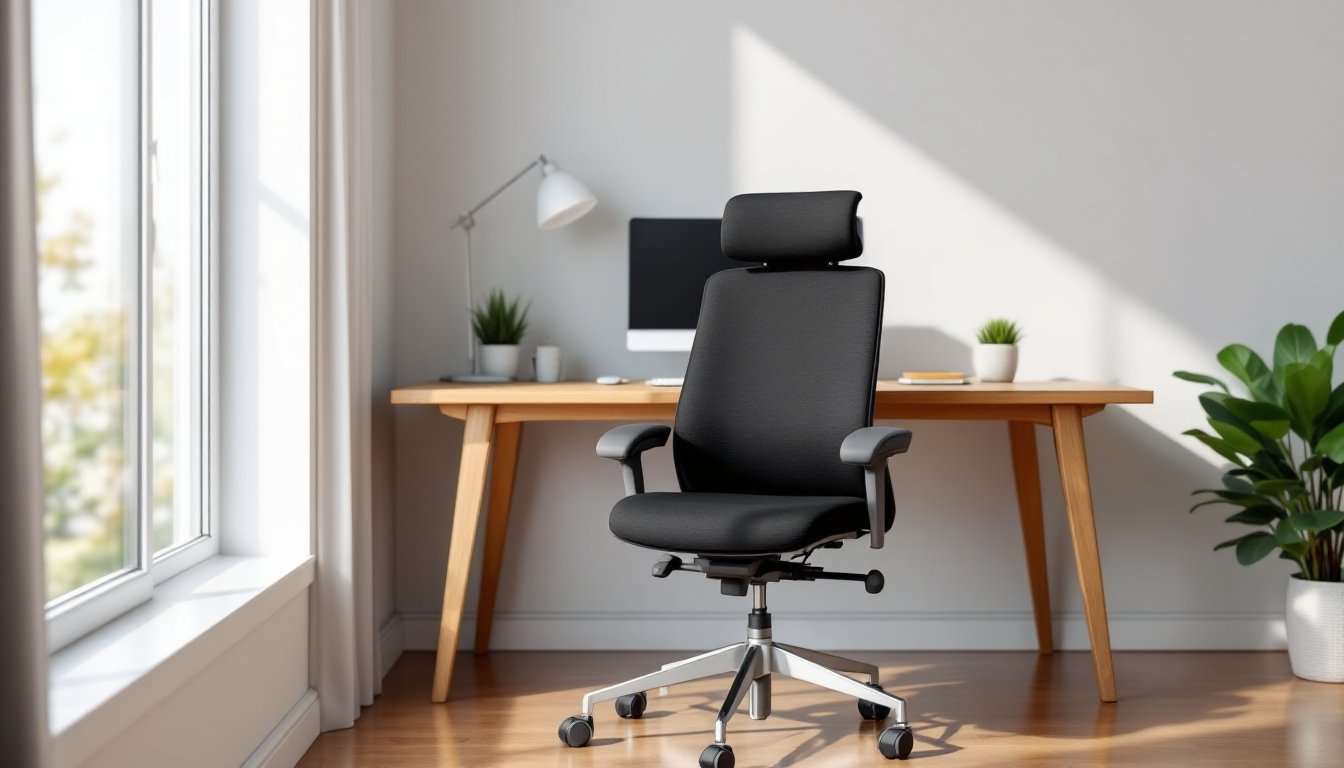
Seat height and proportions affect how the chair reads in the space. A high-backed chair makes a stronger visual statement and signals a dedicated, professional workspace. A mid-back or low-back chair feels less imposing and works better in smaller rooms or open-concept home offices where you don’t want the chair dominating the view.
If you’re designing or redesigning your workspace, interior design ideas from established sources can help you visualize how the chair fits into the bigger picture. The right chair should feel like it belongs, not like something you squeezed in because it was on sale.
Consider also the role of the chair as a functional piece that ties your workspace together. A well-chosen black fabric office chair complements your desk, supports your monitor at the right height, and enables good posture without requiring constant adjustment or compensation. That combination of form and function is what separates a chair you’ll use comfortably for years from one you’ll be shopping to replace in six months.
For comprehensive room design guidance, home décor inspiration and furniture guides can provide the broader context for how your office chair fits into your overall aesthetic.
Conclusion
A black fabric office chair is a straightforward investment in daily comfort and productivity. By prioritizing ergonomic features like lumbar support, adjustability, and proper dimensions, you’re not just buying a seat, you’re buying hours of focused work without backache or fidgeting. Fabric’s breathability and easy maintenance make it the practical choice for everyday use. When you combine durability, design flexibility, and reasonable pricing, black fabric becomes the smart default for home offices. Take time to sit in chairs before buying if possible, check weight and dimension specs against your body and desk, and don’t compromise on basic features like seat depth or gas cylinder quality. The right chair will fade into the background: you’ll only notice it when you’re not in it.