Table of Contents
ToggleYour office chair does more than support you through eight-hour workdays, it sets the tone for your entire workspace. A decorative office chair bridges the gap between form and function, combining aesthetic appeal with the comfort you actually need to stay productive. Whether you’re outfitting a home office, refurbishing a corporate space, or upgrading a neglected corner, the right chair can transform a bland desk setup into an intentional, polished environment. This guide walks you through what makes decorative office chairs stand out, current design trends, and how to pick one that works for both your style and your back.
Key Takeaways
- A decorative office chair balances aesthetic appeal with ergonomic support, using visible materials like tufted upholstery, wooden frames, and metal legs to transform bland workspace setups.
- Contemporary and minimalist decorative chairs feature clean lines and neutral colors, while vintage mid-century inspired designs showcase warm tones and tapered wooden legs—both styles remain highly functional.
- Proper chair height should be 16–18 inches from the floor for standard 28–30 inch desks, with seat depth preventing knee overhang and alignment with your office’s existing color palette and materials.
- High-density foam (1.8+ density), built-in lumbar support, and smooth adjustment mechanisms are essential features that ensure a decorative office chair remains comfortable during full workdays without compromising style.
- Well-made decorative office chairs typically cost $400–$1,200; testing in person for at least five minutes and prioritizing solid wood framing over brand prestige ensures long-term value and productivity.
What Makes a Decorative Office Chair Different
A decorative office chair prioritizes visible materials, finishes, and silhouettes that catch the eye, without sacrificing the ergonomic backbone that keeps you comfortable. Standard office chairs often hide their mechanics under bland plastic shells. Decorative versions, by contrast, expose quality details: tufted upholstery, visible wooden frames, metal legs, or curved backrests that double as design statements.
The distinction matters. A decorative chair still needs lumbar support, adjustable height, and a seat depth that prevents your knees from hanging off the edge. But it also delivers visual interest. Think of it as the difference between a plain gray sofa and one with velvet upholstery and angled arms, both function as seating, but only one makes a statement.
These chairs work especially well in spaces where your office doubles as a guest area or where you spend enough time that the environment should reflect your personality. They’re often lighter on industrial-looking mechanisms (no bulky cylinder bases or aggressive tilt mechanisms) and heavier on craft details. Wood-framed chairs, leather stitching, and fabric textures become features, not afterthoughts.
Key Styles and Design Trends for Modern Offices
Contemporary and Minimalist Options
Contemporary decorative chairs strip away excess and focus on clean lines, neutral color palettes, and geometric forms. These designs favor light woods (ash, oak, or walnut veneer), matte metal bases, and upholstery in charcoal, cream, or soft gray. The silhouette is slim: the frame breathes. You’ll see fewer decorative embellishments and more emphasis on material quality and proportion.
Minimalist office chairs often feature a simple task base with a sculptural seat pan and backrest. They work brilliantly in small spaces or open-concept home offices where visual clutter compounds physical clutter. Platforms like Design Milk regularly showcase contemporary pieces that prove restraint can be just as striking as ornamentation. The trade-off: minimalist chairs can feel cold if the materials aren’t excellent, so prioritize genuine leather, quality fabric, or solid wood over veneers when possible.
Vintage and Mid-Century Inspired Designs
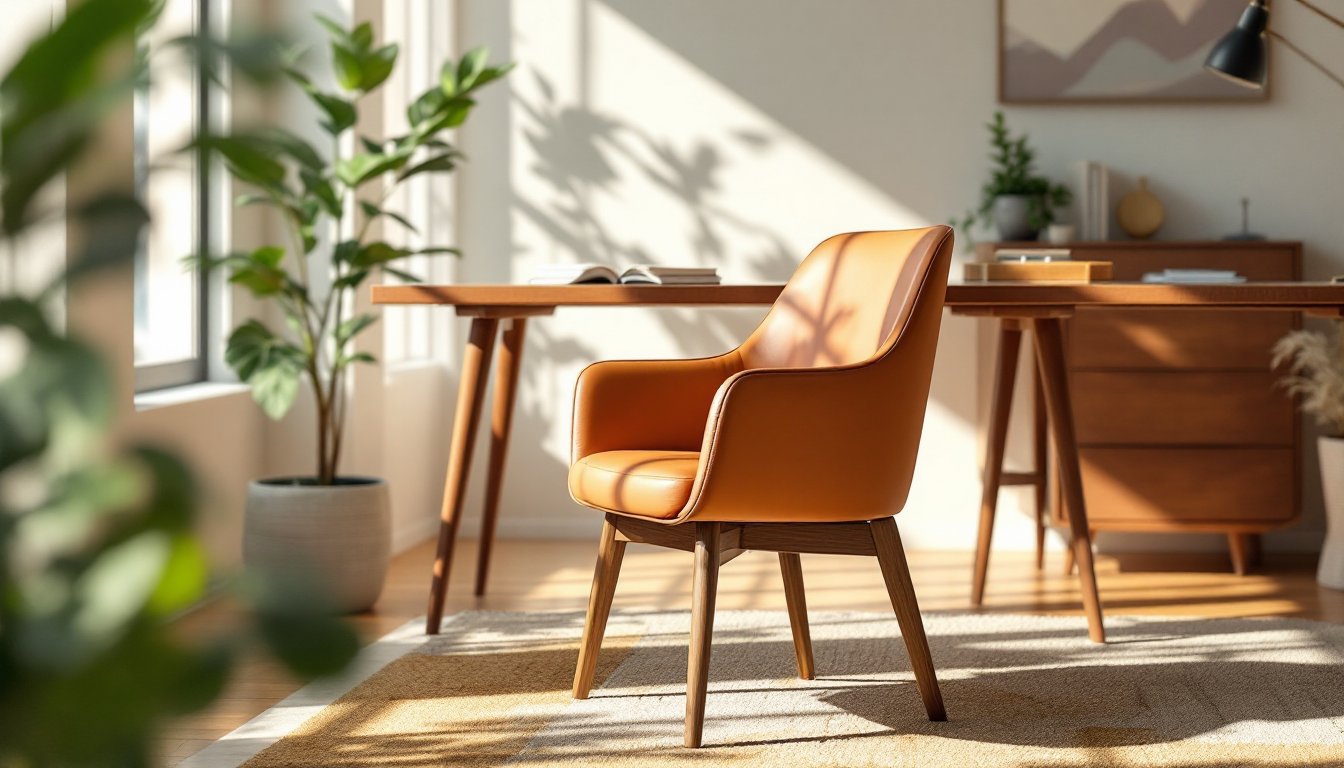
Mid-century modern continues to dominate home office aesthetics. These chairs typically feature tapered wooden legs (often in walnut or teak tones), slim track arms, and a slightly curved backrest. Fabrics lean toward warm tones: mustard, burnt orange, sage, or deep teal. The vibe is retro but functional, think of a chair that looks like it belongs in a 1960s office but doesn’t make your spine ache.
Vintage-inspired doesn’t mean actually buying a 50-year-old chair with broken casters and compressed foam. Modern reproduction mid-century pieces use contemporary springs, high-density foam, and updated mechanisms while preserving the silhouette that makes the style recognizable. Interior design sources like Elle Decor regularly feature these pieces alongside modern interiors, proving the style’s enduring appeal. A well-chosen mid-century chair pairs beautifully with wood desks, vintage filing cabinets, and warm lighting, it’s a cohesive design language that doesn’t feel dated.
Choosing the Right Decorative Chair for Your Space
Start by measuring your desk height and available floor space. A standard desk is 28–30 inches tall: your seat should sit 16–18 inches from the floor to keep your elbows at a 90-degree angle when typing. If your desk is standing-height (40–46 inches), you’ll need a taller stool or adjustable chair. Measure the footprint your chair will occupy. A large wingback or barrel-back design needs breathing room: a slim contemporary chair works in tighter quarters.
Next, assess your office’s existing palette and material story. If you have warm wood furniture and leather accents, a mid-century chair in cognac leather anchors the scheme. If your space runs cool-toned with metal and glass, a contemporary piece in charcoal or light gray keeps the narrative coherent. Mixing is fine, eclectic can work, but random clashing reads as indecision, not intention.
Consider how much chair-time you actually spend. If you’re mobile between a home office and in-person meetings, an attractively minimal 4–6 hour chair works fine. If you’re logging 8+ hours daily, ergonomics aren’t negotiable, and aesthetics come second. Pair a decorative wooden frame with memory foam cushioning and proper lumbar support: the decorative elements shine while your body stays supported. Resources like Homedit cover furniture durability and material longevity in depth if you want to dive deeper into construction quality. Also account for maintenance: light velvet shows dust: dark leather hides spills. Linen and wool blends age beautifully but require occasional vacuuming.
Balancing Aesthetics With Ergonomic Comfort
This is where many decorative chair purchases stumble. A gorgeous designer piece with a shallow seat, minimal backrest support, or zero lumbar attention might feel wonderful for two hours, and punishing by hour four. The best decorative chairs treat comfort and looks as codependent, not competing priorities.
Look for features that work behind the scenes. A high-density foam seat (1.8 density or higher) resists bottoming out and won’t compress into a pancake within a year. Lumbar support can be built into the backrest shape, no need for a bulky external pillow that screams “ergonomic device.” Adjustable height (pneumatic or screw-driven) should be smooth and precise: swivel and tilt mechanisms should operate without squeaking or grinding.
When testing a chair in person, and you should whenever possible, sit for at least five minutes, not a quick bounce. Roll around. Recline slightly. Notice where pressure concentrates. If your lower back feels unsupported or your thighs hang past the seat pan, move on. A decorative chair that leaves you sore isn’t decoration: it’s an obstacle to productivity. Industry standards like the International Organization for Standardization (ISO) 4875 set minimum testing thresholds for office furniture durability and safety, though compliance varies by manufacturer. Ask sellers about their foam density, frame construction (hardwood vs. particleboard), and whether the piece has been third-party tested for ergonomic performance.
Finally, budget accordingly. A well-made decorative chair with solid wood framing, quality upholstery, and genuine ergonomic engineering typically costs $400–$1,200. Below that range, compromises usually appear in foam quality or frame construction. Above it, you’re paying for designer names or exotic materials that don’t necessarily translate to more comfort. Mid-range decorative chairs often offer the best value: recognizable style, durable construction, and honest comfort without luxury pricing.
Conclusion
A decorative office chair is an investment in both your workspace and your workday comfort. By aligning style preferences with genuine ergonomic needs, and choosing a design that fits your space and schedule, you’ll end up with a piece that serves you for years without sacrificing aesthetics for function. Measure your space, test before buying, and prioritize construction quality over brand hype. Your back, and your office, will thank you.