Table of Contents
ToggleA well-organized workspace starts with the right storage solution. Office storage cabinets are the backbone of any productive home office or commercial workspace, keeping supplies, documents, and equipment accessible yet out of sight. Whether you’re setting up a remote work station, expanding a small office, or tackling workspace chaos, choosing and installing the right office cabinets and shelves can transform how you work. This guide walks you through why storage matters, what options exist, and how to select, install, and maintain cabinets that fit your space and workflow.
Key Takeaways
- Office storage cabinets eliminate visual clutter and boost productivity by keeping supplies and documents organized and accessible while protecting sensitive materials and equipment.
- Lateral file cabinets suit frequent document access, while vertical cabinets save floor space in tight offices—choose based on your actual filing needs and available square footage.
- Proper installation requires measuring doorways and floor levelness, locating wall studs, and securing heavy cabinets with lag bolts or L-brackets to prevent tipping and safety hazards.
- Labeling and organizing storage cabinets with color-coded systems and dividers maintains functionality long-term; maintenance like dusting monthly and tightening hinges quarterly prevents drawer sticking and deterioration.
- Ready-made cabinets offer speed and warranties, while DIY or custom-built storage solutions provide design freedom and better fit for unique spaces—weigh time and skill requirements against cost savings.
- Plan for future growth by measuring realistic inventory needs and considering modular office storage cabinets that allow you to add units as your business expands.
Why Office Storage Cabinets Matter
A cluttered desk sabotages focus. When pens, papers, and supplies sprawl across your work surface, your brain spends energy managing visual chaos instead of tackling tasks. Office storage cabinets eliminate that friction by keeping items organized, protected, and within arm’s reach.
Beyond productivity, proper storage protects your investment. Documents stay dry and legible instead of water-damaged. Electronics remain dust-free. Files stay confidential behind closed doors. For anyone running a business from home, that security matters legally and professionally.
Storage cabinets also maximize square footage. Vertical storage means you reclaim desk and floor space without expanding your office footprint. In tight home offices, that difference between cramped and functional is often just a single cabinet.
Types of Office Storage Cabinets to Consider
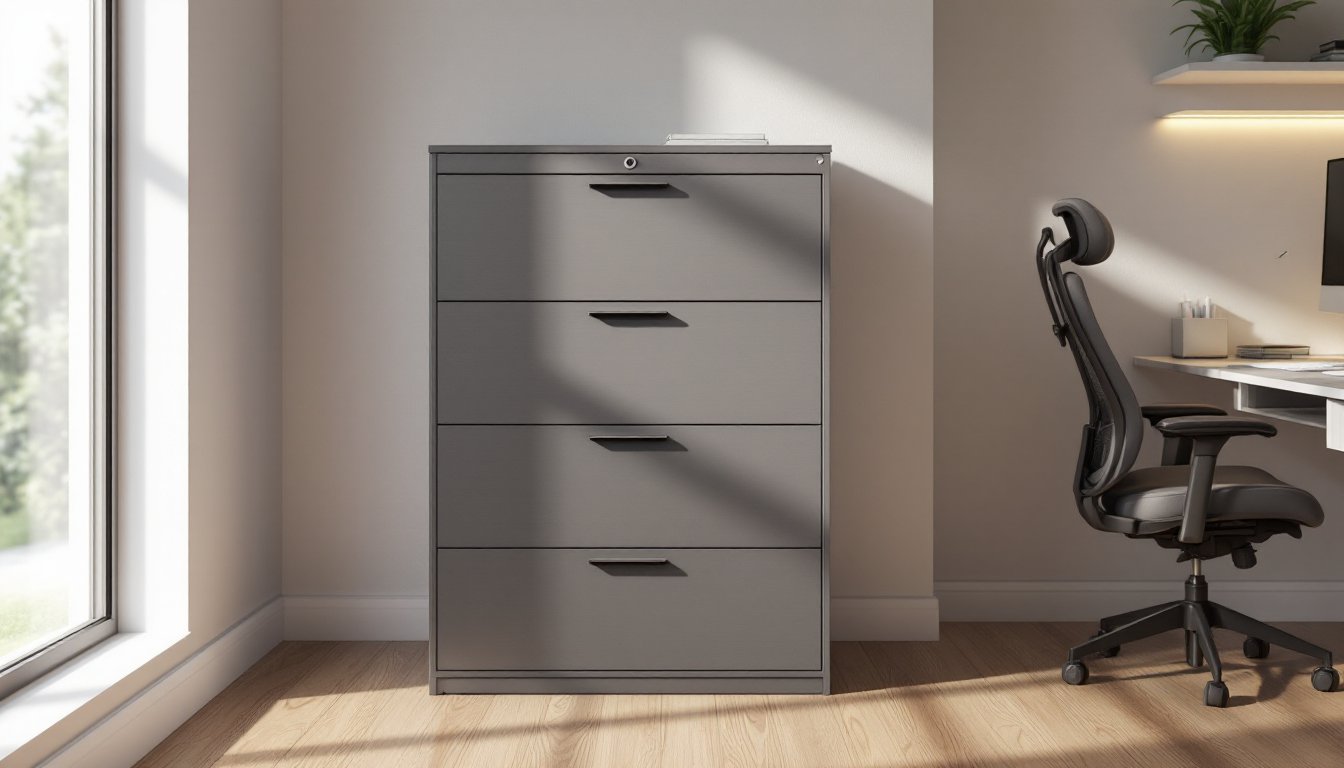
Lateral File Cabinets are the standard for document storage. They come in 2-, 3-, 4-, and 5-drawer configurations, with typical widths of 30, 36, or 42 inches. A standard lateral cabinet depth runs 18 inches (nominal). They work best for active filing and frequent access.
Vertical File Cabinets occupy less floor space than lateral models but are taller, usually 25 to 67 inches high. They’re ideal for small offices where you can’t spare extra floor width. Vertical cabinets typically hold letter or legal-size files and work well against walls.
Home office storage cabinets designed for general supplies (staplers, tape, notepads, cables) come in various styles. Wall-mounted units save floor space. Freestanding cupboards provide flexible placement and double as desk surfaces or shelving. Modular units let you stack and customize.
Storage cabinets for office shelving, open or with backing, suit supplies you access daily. Closed backing prevents dust: open shelves keep items visible and grab-ready. Depth varies from 12 inches (shallow, for small items) to 24 inches (deeper, for binders or equipment).
Office furniture storage cabinets that combine filing, shelving, and workspace are popular hybrids. Think cabinets with a work surface on top or integrated into a desk unit. These maximize functionality in tight footprints. Home office cabinets and shelves combinations save money and floor space by merging two functions.
Material Choices:
- Steel: Durable, fire-resistant, easy to clean. Best for high-traffic or industrial spaces.
- Laminate/Particleboard: Budget-friendly, lighter weight, adequate for light to moderate use.
- Solid Wood: Aesthetically superior, sturdier, more expensive. Best for executive or high-end spaces.
- Veneer: Splits the difference, real wood look at lower cost, though less durable than solid.
Choosing the Right Size and Style for Your Space
Start with a realistic inventory. Count how many file drawers you’ll actually need. Survey the items you store daily, weekly, and rarely. Overbuying means wasted space and cost: undersizing forces you to stack items insecurely.
Measure your wall or floor space carefully. Account for door clearance, a file drawer or cabinet door needs space to open fully. Leave at least 36 inches from the cabinet front for someone to stand and access files comfortably. Height matters too: if you’re 5’6″, a 67-inch tall cabinet places upper drawers out of comfortable reach.
Style should match your office aesthetic and brand. A minimalist home office suits sleek metal or white laminate. An established professional practice benefits from warm wood cabinets that convey stability. Don’t sacrifice function for looks, a beautiful cabinet that’s the wrong size or depth solves nothing.
Consider future growth. Modular office furniture storage cabinets allow you to add units as your business expands. A lateral cabinet today can be complemented with a shelving unit next year without clashing.
Weight capacity matters if you’re mounting cabinets to walls. A full lateral file cabinet can weigh 800+ pounds. Wall studs in standard construction are 16 inches on center. You’ll need to bolt heavy cabinets directly to studs or use heavy-duty anchors rated for the load. When in doubt, consult a structural engineer or contractor, a fallen cabinet full of files is a safety hazard and lawsuit waiting to happen.
Installation Tips and Best Practices
Pre-Installation Checklist:
- Measure doorways to ensure the cabinet fits through (rotate diagonally if needed).
- Check that your floor is level, use a 4-foot level and shim as necessary. Uneven floors cause drawers to stick or swing open on their own.
- Verify wall studs are where you need them (use a stud finder).
- If placing on carpet, slide a plywood base underneath to distribute weight and prevent sinking.
For Wall-Mounted Cabinets:
Locate studs and mark them clearly with pencil. Drill pilot holes (smaller than your fastener) to prevent wood splitting. Use lag bolts or heavy-duty screws into studs, not drywall alone, drywall anchors fail under sustained load. If studs don’t align with your cabinet, install a horizontal ledger board across the studs, then mount the cabinet to the ledger.
For Freestanding Cabinets:
Use shims under the base until it’s level. Secure to wall studs with L-brackets if you have children, pets, or live in a seismic zone, even freestanding units should be strapped to prevent tipping. This is especially important for tall, narrow cabinets.
Assembly Considerations:
Some cabinets arrive flat-packed. Budget time and recruit a second pair of hands, complex units are frustrating alone. Follow the manual exactly: fasteners in the wrong spots create weak joints. Tighten all hardware before opening drawers fully.
Many DIYers skip drawer runners and slides until something binds. Test all drawers and doors during installation. A stuck drawer now means a stuck drawer for years. Adjustable runners let you fine-tune alignment if a drawer hangs slightly high or low.
Plans available on sites like Instructables and Ana White cover custom-built storage solutions if you prefer woodworking a cabinet to match your existing furniture.
Organizing and Maintaining Your Cabinets
Organization systems keep cabinets functional long-term. Label everything, drawers, shelves, file folders. A color-coded filing system (red = invoices, blue = contracts, green = client files) speeds up retrieval. Without labels, cabinets devolve into junk drawers.
Use vertical dividers in deep drawers to prevent files from slumping and creasing. Hanging folders sit straighter with support. For supply storage, stackable bins and drawer organizers prevent small items from migrating into chaos.
Maintenance:
- Dust regularly with a soft cloth to prevent grit from scratching finishes.
- Wipe metal cabinets monthly to prevent rust, especially in humid climates.
- Check hinges and drawer runners quarterly. Tighten loose screws before they worsen alignment.
- For wood finishes, use appropriate polish every 6–12 months to prevent drying and cracking.
- Avoid overloading drawers past their rated capacity, that 800-pound weight limit is per unit, not per drawer. Distribute files evenly across drawers.
If a drawer starts sticking, remove it and inspect the runners and guide rails for debris. A vacuum and dry cloth usually fix the problem. Don’t force a stuck drawer: you’ll derail it permanently.
DIY vs. Ready-Made: Which Option Is Right for You
Ready-Made Cabinets are best if you prioritize speed and consistency. You order, receive, assemble (minimal), and install. Most come with warranties. Metal lateral files from reputable manufacturers will last 10+ years. Downsides: you’re limited to standard sizes and colors, and quality varies wildly across price points.
DIY or Custom-Built Cabinets make sense if you need specific dimensions, aesthetics, or have unique space constraints. Building your own lets you choose materials, finish, and hardware. The downside is time and skill, a poorly built cabinet sags, wobbles, or fails. Start with a proven plan from a trusted source like Fix This Build That, which focuses on solid construction fundamentals.
Consider cost honestly. A ready-made 4-drawer lateral file costs $300–$500 for decent quality. Building the equivalent from plywood, hardware, and finish materials runs $150–$300 in materials but demands 20–30 hours of your time. At $15/hour labor value, DIY only saves money if you enjoy the work or have no alternative.
For home office built-in office cabinets, custom units that integrate with your desk or walls, DIY construction is more appealing because ready-made built-ins either don’t exist or cost thousands. A joinery mistake on a freestanding cabinet is annoying: the same error on a built-in, anchored to walls, requires demolition to fix. Err toward professional installation for built-ins unless you’ve successfully completed similar projects.
Hybrid approach: buy a quality base cabinet and customize the interior organization yourself. You get structural reliability and design freedom.
Conclusion
Office storage cabinets are an investment in both productivity and professionalism. Whether you choose ready-made lateral files, modular shelving, or a custom built-in solution, the key is matching your actual storage needs to your space and workflow. Take time to measure, plan for growth, and install securely. A well-organized workspace isn’t just prettier, it’s quieter, faster, and more focused. Start with one unit and expand as your needs evolve.