Table of Contents
ToggleA cluttered desk doesn’t just waste time, it tanks productivity. Whether you’re running a home office, managing a corner workspace in a den, or tackling a sprawling corporate setup, office storage shapes how efficiently you work. The right approach to office storage drawers, shelving, and filing systems turns chaos into order. This guide walks you through practical office storage solutions, from strategic furniture placement to DIY projects that fit your budget. You’ll learn how to maximize every inch of your workspace without relying on decorative fluff or expensive built-ins that take weeks to install.
Key Takeaways
- A well-organized office storage system boosts focus and decision-making by reducing visual clutter and cognitive load on your brain.
- Lateral filing cabinets and wall-mounted shelving maximize office storage in smaller spaces while vertical storage solutions take advantage of unused ceiling height.
- DIY office storage projects like bracket-and-board shelving cost $30–60 per unit and can be installed in an afternoon with basic tools like a stud finder and level.
- Office storage systems work best when they match your actual workflow—digital-first workers need less filing cabinet space but more drawer organization for supplies.
- Maintaining office storage requires simple weekly resets and quarterly audits rather than complex systems that demand excessive time investment.
Why Office Storage Matters More Than You Think
Most people underestimate how much a disorganized office drains their day. Papers pile up, pens vanish, and important documents disappear under stacks of supplies. Beyond the frustration, poor office storage creates real costs: lost time searching for files, duplicated supply purchases, and mental fatigue from visual clutter.
When your workspace is organized, your brain works smarter. Research consistently shows that reducing visual clutter boosts focus and decision-making. A well-designed home office storage system means fewer interruptions and less cognitive load, your brain isn’t constantly processing visual noise.
Office storage isn’t just about shoving things out of sight. It’s about creating systems that support your actual workflow. The right combination of office storage drawers, filing cabinets, shelving, and small office storage solutions means everything has a logical home. When items are easy to find and return, organization becomes automatic, not a constant chore.
Essential Storage Furniture for Every Workspace
Filing Cabinets and Shelving Systems
Filings cabinets remain the workhorse of office organization, even though going digital. A lateral filing cabinet (the flat, wide style) takes up less wall space than a vertical cabinet and integrates more smoothly into most home offices. Standard widths run 30″ to 36″, with drawers holding letter or legal-size files. Vertical cabinets work better if your space is narrow, they push out less into the room.
When choosing between wood and metal, consider your aesthetic and durability needs. Metal cabinets (usually powder-coated steel) tolerate moisture better and hold heavier loads, but wood fits warmer design schemes. For smaller spaces, modular home office furniture combines filing capability with open shelving, giving you flexibility without a heavy footprint.
Shelving systems handle both files and everyday items. Floating shelves work visually but can sag under weight, they work best for display or light office supplies storage. For actual load-bearing (books, binders, supplies), use a fixed shelving unit with support brackets rated for your items’ weight. Standard shelf depth runs 10″ to 12″ for office use: anything less feels cramped.
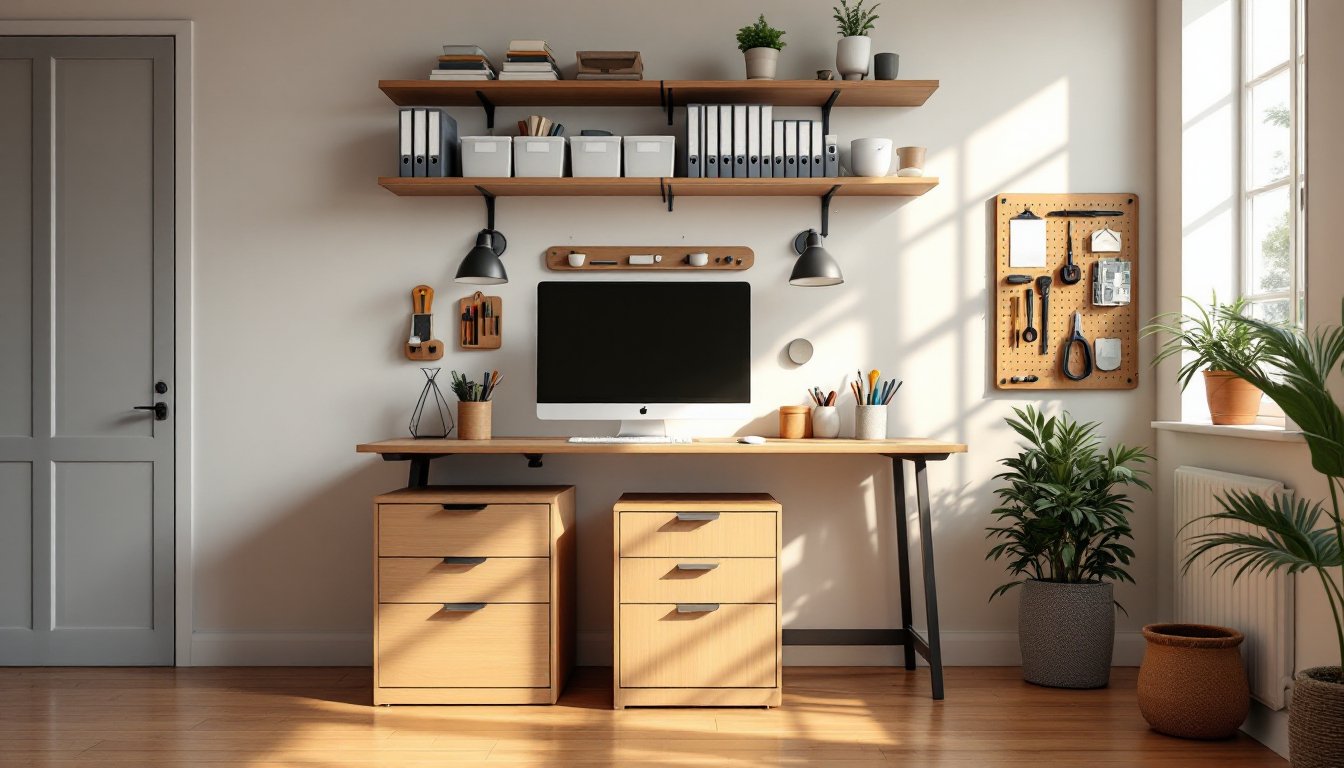
Home office bookshelves serve dual duty as storage and room definition. A 72″-tall unit with four or five shelves fits most home offices without overwhelming the space. Pair it with filing cabinets or desk-mounted shelving for a layered storage approach. Open shelving creates visual lightness: paired with office drawer storage for supplies, it balances aesthetics with function.
Smart Organization Strategies That Work
Vertical Storage and Space-Saving Techniques
Vertical space is cheap real estate in most home offices. A standard 8-foot ceiling gives you room to install shelving or cabinets much higher than eye level. Wall-mounted shelving pulls supplies off your desk surface, reducing clutter and freeing workspace.
Wall-mounted office desk storage racks and pegboards work well for active supplies (pens, scissors, tape). Pegboards let you customize tool placement and adjust as needs change. For supplies storage, clear wall-mounted organizers let you see inventory at a glance, reducing duplicate purchases.
Offset shelving works visually: stagger shelf heights so the unit doesn’t feel like a plain grid. This approach works especially well in smaller office storage setups. A 24″ or 30″ shelf might float at eye level, with a 36″ shelf below and a 18″ shelf above, creating rhythm while maximizing capacity.
Drawer dividers transform office storage drawers from dumping grounds into logical zones. Separate pens from clips from sticky notes. Over-the-door organizers add storage without eating wall space, mount one on your office door for quick-access supplies.
Labeling is invisible but critical. A label maker costs under $30 and saves hours of searching. Label shelf edges, drawer fronts, and container sides. When everyone (including your future self) knows where things go, organization stays consistent. The home office built-in office cabinets approach works well for permanent setups, but most home offices benefit from flexible, layered solutions instead.
DIY Office Storage Projects for Budget-Conscious Homeowners
Building basic shelving doesn’t require advanced carpentry. A simple bracket-and-board shelf costs $30–60 per unit and installs in an afternoon with basic tools.
What you’ll need:
- Heavy-duty shelf brackets (rated for your load)
- 1×12 or 1×10 lumber (pine or oak)
- Wall studs (find with a stud finder)
- 2.5″ wood screws or lag bolts (depending on bracket type)
- Level, drill, and circular saw
- Sandpaper and wood stain or paint (optional)
Basic steps:
- Locate studs with a stud finder, mark centers with pencil. Studs run 16″ or 24″ on center. Mounting to studs ensures weight capacity: drywall anchors fail under office supplies.
- Measure and mark bracket height. Use a level to ensure marks are plumb. Standard desk-height shelving sits 18–24″ above your work surface.
- Install brackets to studs with lag bolts or wood screws (follow bracket specifications). Pre-drill to prevent splitting.
- Cut lumber to length, measure the span between outermost bracket points. Sand edges smooth.
- Set the board on brackets and secure per manufacturer guidance (usually bolts from underneath).
Consider storing office supplies in clear plastic bins under shelves or inside cabinets. Uniform bin sizes stack neatly and let you see what’s inside. Label them clearly.
Desk organizers can be DIY’d too. A simple desktop caddy using wood scraps and a nail gun takes 30 minutes. Step-by-step DIY tutorials often show storage solutions using reclaimed wood or basic materials.
For office supply storage organizers, repurposed mason jars, tin cans, and small boxes work surprisingly well. Paint them to match your decor and arrange them on shelves or your desk surface. This cost almost nothing and lets you customize sizes.
Maintaining Your Organized Office Long-Term
Organization fails when systems become too complex. Start simple: one filing method, one supply system, one shelf arrangement. If maintaining it takes 20 minutes a week, it’s too much.
Practical tips that stick:
- Weekly reset: Spend five minutes every Friday clearing your desk and returning items to their homes. This prevents weekend-to-Monday chaos.
- Quarterly audit: Every three months, sort through supplies and remove expired items or duplicates. This keeps inventory real and prevents hoarder tendencies.
- One-in-one-out rule: When buying new supplies or files, remove something old. This prevents slow creep toward chaos.
- Accessibility: Store the items you use most within arm’s reach. Seasonal or rarely used items go higher or deeper in storage. This reinforces your system daily.
Small office storage ideas work only when they fit your actual habits, not your aspirational habits. If you print everything, a filing cabinet matters. If you’re digital-first, you need less paper storage but more drawer space for office supplies.
Invest in quality fixtures only where they matter, filing cabinets and primary shelving. Budget options work fine for secondary storage and office desk storage that holds lighter items. Read reviews and check weight ratings: a $40 shelf that holds 50 pounds is useless if you’re storing 200 pounds of books.
When your office storage and organization system matches your workflow, maintaining it becomes invisible. You’re not “being organized”, you’re just working.