Table of Contents
ToggleSetting up a home office demands more than a desk and a laptop, it requires a chair that actually supports your body through eight-hour workdays. A boss office chair isn’t just about looks: it’s an investment in comfort, posture, and long-term health. Whether you’re dealing with chronic back pain, wanting to elevate your workspace aesthetic, or simply tired of neck strain from cheap seating, this guide walks you through selecting and maintaining a quality boss chair that fits your budget and style. The right choice can transform how you feel at the end of each workday.
Key Takeaways
- A boss office chair is engineered for extended sitting with higher weight capacities, thicker cushioning, and robust frames that outperform standard office seating.
- Prioritize adjustable lumbar support, 4D armrests, and proper seat depth (3–4 inches from edge to knees) to prevent back and neck strain during eight-hour workdays.
- Mid-range boss chairs ($200–$500) often deliver 80% of the performance of premium models by focusing on solid mechanics over luxury materials.
- Mesh and fabric-blend upholstery offer better durability and breathability than leather, making them ideal for daily high-use environments.
- Extend your boss chair’s lifespan to 7–10 years with quarterly hardware checks, regular dusting, immediate spill treatment, and replacing worn casters or gas cylinders when needed.
What Makes a Boss Office Chair Different From Standard Seating
A boss office chair, sometimes called an executive or task chair, differs from basic office seating in several critical ways. Standard chairs prioritize cost and compactness, often skimping on lumbar support, arm height adjustment, and seat depth. Boss chairs, by contrast, are engineered for extended sitting and typically include higher weight capacities (often 250–350 lbs), thicker cushioning, and more robust frames.
The term “boss” typically signals a chair designed for leadership roles or high-use environments, which translates to better materials and construction. You’ll find higher-grade foam in the seat pan, stronger tilt mechanisms, and more durable fabric or leather that resists pilling and wear. The base is usually heavier-duty, with thicker casters that roll smoothly on hardwood or carpet without catching. Most boss chairs also offer multi-directional lumbar adjustment and wider seat widths, making them suitable for all-day work sessions.
Key Features to Look for in a Quality Boss Chair
Ergonomics and Lumbar Support
This is the non-negotiable foundation of any boss chair worth buying. Lumbar support, the inward curve that matches your lower spine’s natural arch, should be adjustable both vertically and sometimes horizontally. Look for chairs offering at least 4–6 inches of lumbar depth adjustment so you can dial in your personal sweet spot.
Arm height matters too. Your elbows should sit at a 90-degree angle when your feet are flat on the floor and your desk is at a comfortable working height. Many boss chairs feature 4D armrests (height, width, depth, and angle adjustment), which cost more upfront but pay dividends in shoulder and neck relief. Seat depth should allow 3–4 inches of space between the seat edge and your knees: any less, and you’ll get thigh compression after a few hours.
The tilt mechanism shouldn’t be overlooked either. A multi-position lock lets you recline safely for brief breaks, and a tension knob lets you adjust how much force it takes to lean back, critical if you’re under 130 lbs or over 250 lbs.
Material and Durability Considerations
Mesh fabric dominates modern boss chairs because it breathes well and resists staining, though it feels less luxurious. Fabric blends (often polyester and nylon) offer a middle ground: they’re durable, easier to clean than pure fabric, and less prone to pilling than cheap synthetics. Genuine leather or bonded leather looks premium but requires regular conditioning and isn’t as breathable, save this for occasional-use executive spaces, not daily eight-hour sits.
The base matters more than most people realize. A five-star caster base is standard, but check the material: polyurethane wheels work on hardwood without marring, while nylon casters suit carpet. Gas cylinders vary in quality: reputable brands use Class 4 cylinders that meet safety standards, reducing the risk of failure or sudden drops.
Frame construction is worth inspecting too. A boss office chair with a quality frame should have metal or reinforced plastic under the seat pan, with visible welds or rivets that look even and solid. Cheap frames crack or sag after 12–18 months of daily use.
Styling Your Boss Chair to Match Your Home Office Aesthetic
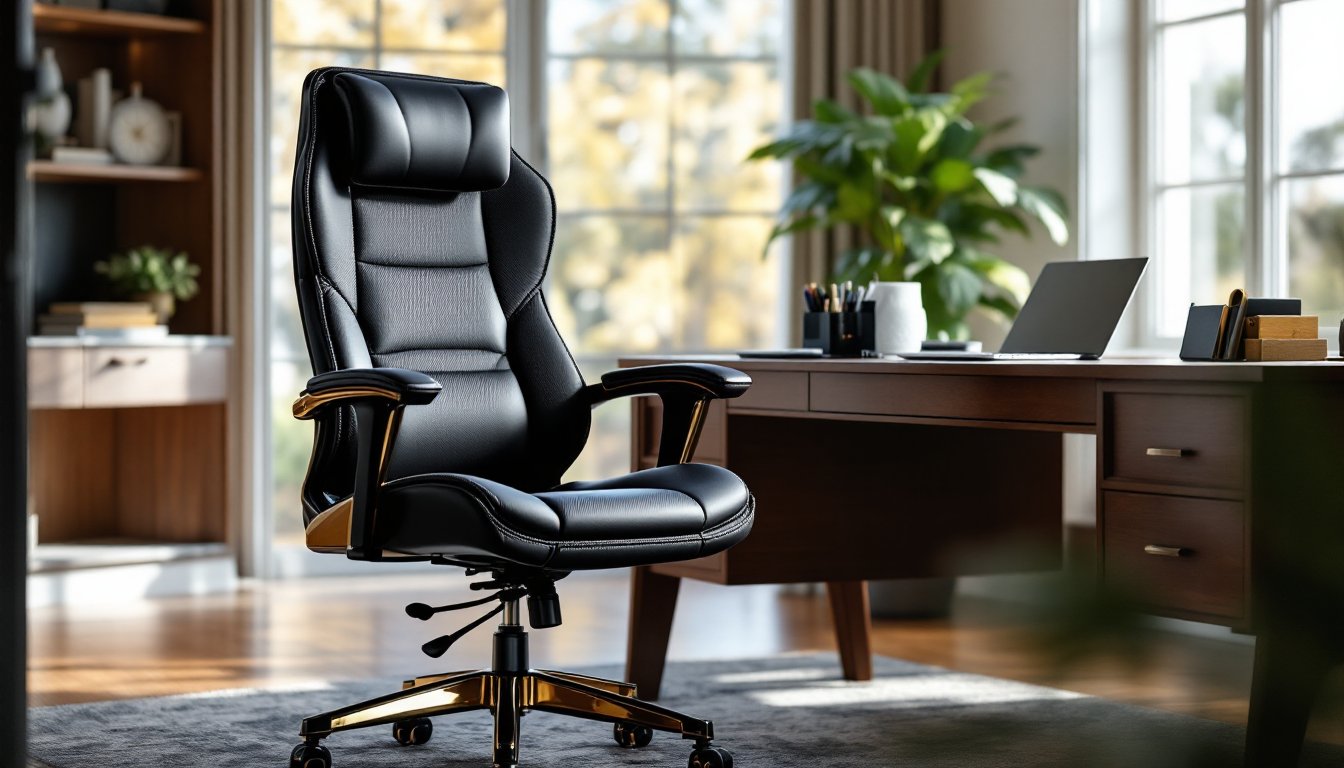
A quality boss chair is a visual anchor in your workspace, so choosing one that complements your décor matters. Black and gray dominate executive settings, but modern offices increasingly embrace jewel tones, whites, and warm neutrals.
If you’re building a formal workspace, pair a leather or faux-leather chair in black or dark gray with traditional wood desks and shelving. Current home office design trends, so look for chairs with clean lines and minimal stitching details. A white or cream mesh chair works beautifully in Scandinavian or minimalist setups, especially paired with light wood tones.
Scale matters in smaller rooms. A high-backed chair in a 10×10 office can feel cramped, while a mid-back or task-height option opens up the space visually. Measure your ceiling clearance and test chairs in-person if possible, what looks sleek online might overwhelm your actual room.
Consider the armrest color too. If your chair is black mesh but your arms are upholstered in bright fabric, the mismatch can feel jarring. Neutral black or gray padding on arms blends with most office schemes, and premium furniture should have color harmony throughout. Some boss chairs offer reversible seat covers or cushion replacements, which extends lifespan and lets you refresh the look without replacing the entire chair.
Budget-Friendly Options Without Sacrificing Quality
Premium boss chairs run $400–$1,200, but solid mid-range options sit at $200–$500 and deliver 80% of the performance. The trick is knowing where corners are being cut and whether those corners matter to you.
If adjustability is your priority, mid-range chairs often sacrifice fancy materials for robust mechanics. A $300 chair with solid lumbar adjustment, 4D arms, and a multi-position tilt outperforms a $600 chair in mesh with fixed arms and a basic tilt mechanism. Read reviews specifically mentioning long-term durability, look for comments about wobbling, cylinder failure, or fabric pilling after 12–24 months.
Brand reputation matters more than flashy marketing. Established manufacturers like those covered on DIY project forums and resource sites tend to use better cylinders, smoother mechanisms, and longer-lasting foam. Avoid the deepest-discount chairs (under $150) unless you’re furnishing a rarely-used guest office, you’ll replace it within two years.
Shop during off-peak seasons (late August, January, or post-holiday sales) for 15–25% discounts on mid-range models. Many retailers offer floor models at 30–40% off, and if the cushioning or frame shows minor cosmetic wear, you’re getting a tested, verified product at a steep discount. Request documentation that the cylinder and tilt mechanism are original and functional, this confirms no prior abuse or repair history.
Maintenance and Care Tips for Long-Lasting Office Chairs
A boss chair is furniture, not a consumable. With basic care, a quality chair should deliver 7–10 years of reliable service before the gas cylinder or foam begins noticeably degrading.
Dust and vacuum regularly. Mesh chairs trap dust in the weave, which reduces breathability and looks dingy. Use a soft brush attachment weekly, and every month, use a lint roller across the seat and backrest. For fabric chairs, a handheld vacuum with a small upholstery nozzle works well.
Address spills immediately. Blot (don’t rub) liquid with a clean, dry cloth. For sticky residue, use a mix of warm water and mild dish soap on a damp cloth, then wipe again with distilled water to rinse away soap residue. Let air dry completely, heat speeds the process but can set stains.
Check hardware quarterly. Tighten any loose bolts on the base or armrests with an appropriate wrench. Wobbling often stems from a single loose connection rather than frame failure. If casters are dragging or sticking, clean them with a stiff brush and remove wrapped hair or fiber.
Rotate the chair if possible. If you always lean left or right, the foam compresses unevenly. Moving the chair 180 degrees periodically distributes wear. If armrests are fixed and one gets heavy use, ask the manufacturer if you can swap or rotate cushion covers.
Replace parts as needed. Gas cylinders fail after seven years or so, expect $30–$80 for a replacement and 10 minutes of work. Caster wheels wear out faster on hardwood: a set of four replacement wheels costs $15–$40 and extends chair life significantly.