Table of Contents
ToggleA Chesterfield office chair brings a touch of British heritage and refined sophistication to any workspace, without sacrificing the functionality modern professionals demand. Whether you’re furnishing a home office, a corporate suite, or a creative studio, this iconic style bridges the gap between boardroom gravitas and comfortable all-day seating. Unlike trendy office chairs that fade in and out of fashion, the Chesterfield’s distinctive buttoned back, rolled arms, and substantial frame have remained desirable for over 250 years. If you’re considering one for your workspace, understanding what makes it tick, and whether it’s the right fit for your needs, will help you make an investment you’ll actually enjoy using, not just admiring from across the room.
Key Takeaways
- A Chesterfield office chair combines timeless British design—including button-tufted backs, rolled arms, and hardwood frames—with modern functionality for a professional workspace that looks intentional and feels supportive.
- The firmness and upright support of a Chesterfield office chair excel for 4–6 hour focused work blocks, while its visual presence boosts productivity and morale in home offices more than generic ergonomic alternatives.
- Choose between high-end ($2,000–$5,000+), mid-range ($800–$1,500), or budget options ($300–$700) based on durability needs; mid-range models balance authentic style with practical adjustments like pneumatic height control and breathable upholstery.
- Measure your space (standard width is 30–36 inches) before ordering, and verify floor compatibility by selecting soft-tread casters for hardwood or medium-tread for carpet to protect your surfaces.
- Simple maintenance—monthly leather conditioning, regular vacuuming for fabric, and quarterly mechanical checks—keeps a Chesterfield office chair functional for decades rather than years.
What Defines a Chesterfield Office Chair
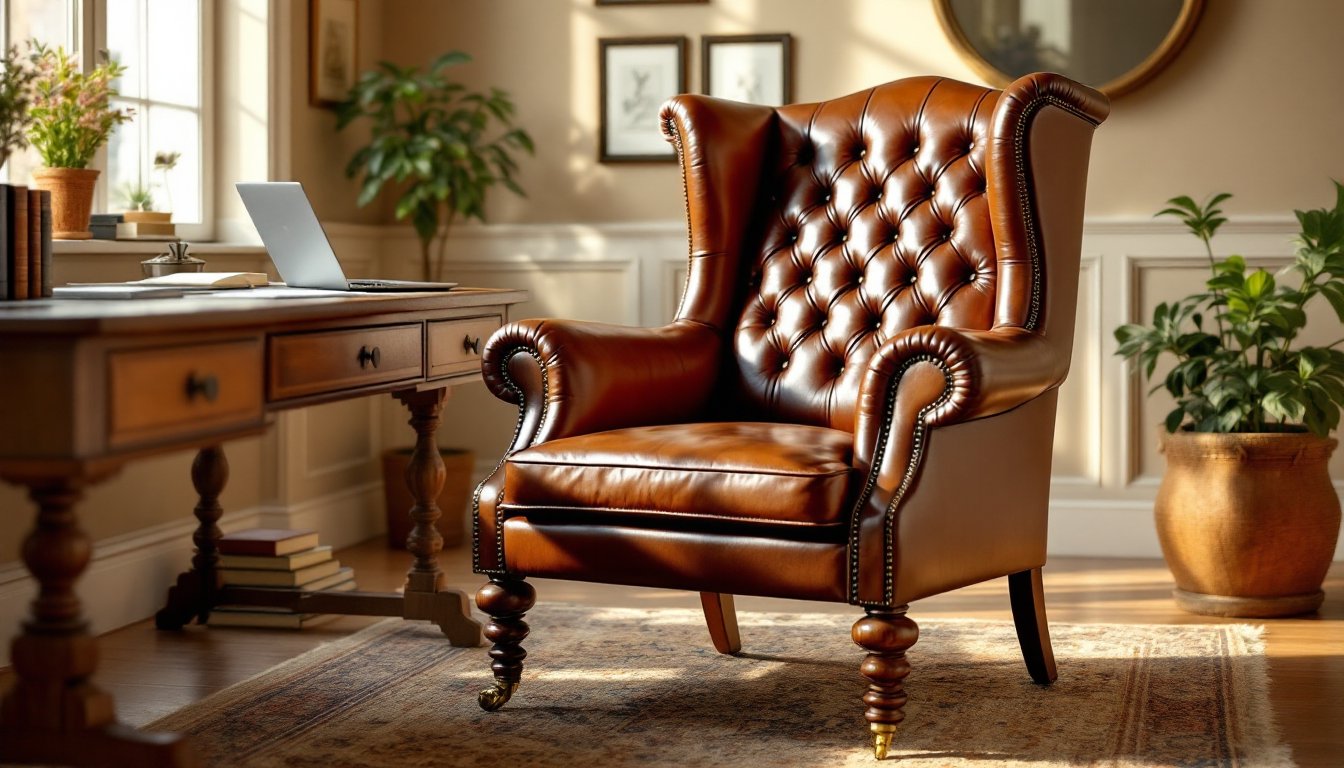
A true Chesterfield chair is defined by a handful of unmistakable design elements. The most obvious is the button-tufted back, upholstered panels secured with deep buttons that create a diamond or square quilted pattern. This isn’t just decoration: it distributes pressure and prevents the cushioning from bunching up over time. The frame typically features rolled or curved arms (sometimes called club arms) that sit at roughly the same height as the back, giving the chair its signature silhouette.
The base is usually set on turned wooden legs, traditionally stained mahogany or walnut, though modern versions come in everything from brass casters to upholstered pedestals. The seat and back are firmly cushioned, usually with a dense foam core wrapped in layered batting, then upholstered in leather, cotton velvet, or linen. Real Chesterfields don’t skimp on construction, you’ll find eight-way hand-tied springs, hardwood frames, and corner blocks for durability.
When shopping for an office version, look for variants that keep the visual hallmarks (buttons, rolled arms, substantial proportions) while adding practical features like adjustable seat height, swivel mechanisms, and smooth-rolling casters. The marriage of heritage style and modern function is what makes a Chesterfield office chair worth the investment rather than a pure accent piece.
Why Chesterfield Chairs Work for Home Offices
Design Versatility and Decor Appeal
A Chesterfield office chair works across nearly every interior scheme because its bones are so strong and recognizable. In a traditional library-inspired office, it anchors the space with inherited-wealth-without-the-inheritance credibility. In a modern minimalist room, the same chair reads as a sculptural statement piece, statement through restraint rather than flash. The key is material and color: a deep leather cognac or chocolate brown plays period-appropriate: a soft gray linen feels contemporary: a jewel-tone velvet can anchor an eclectic or maximalist space.
Unlike trendy ergonomic mesh chairs that scream “2020s office,” a Chesterfield carries weight and presence. It suggests someone who takes their work seriously enough to sit well while doing it. If you’re hosting clients, conducting video calls, or just want your workspace to feel intentional rather than corporate-issue, the visual impact of the chair matters. Many people working from home report that upgrading from a generic office chair to something intentional, something they actually want to sit in, improves focus and morale.
Comfort and Ergonomic Considerations
Here’s where honest assessment matters: a Chesterfield office chair is comfortable, but in a different way than a modern gaming or task chair. The firm, deeply cushioned seat and back provide excellent lumbar support for upright, focused work. The rolled arms naturally support your forearms during desk work. The substantial weight and wide base prevent tipping, a real benefit if you’re prone to leaning or shifting throughout the day.
That said, if you have chronic back pain, require extensive recline functionality, or spend eight hours a day sunk into a chair, you’ll want to test-sit before committing. A Chesterfield’s firmness suits 4–6 hour work blocks brilliantly: beyond that, you might crave adjustable lumbar support or seat tilt mechanisms that traditional designs don’t typically offer. Modern office-specific Chesterfield variants address this by incorporating height-adjustable bases, subtle tilt mechanisms, and breathable upholstery options that prevent heat buildup during long sessions. Look for models with pneumatic seat adjustment (the lever that raises and lowers the height) if you’re sharing the chair with people of different heights or working variable-length days.
Choosing the Right Chesterfield for Your Space
Start with measurements. A full-scale Chesterfield typically spans 30–36 inches wide and 32–36 inches deep (seat to back). If your office is compact, look for a compact or slimline Chesterfield office chair (27–30 inches wide), they exist and still carry the visual identity without dominating a small room. Measure your doorways and hallways before ordering: a chair this substantial needs a clear path into the space.
Decide on your priority: pure aesthetics, ergonomic adjustment, or a genuine hybrid. High-end options from traditional makers offer exceptional construction and heritage leather or wool (look at resources like Ana White’s DIY furniture plans for inspiration on integrating statement pieces into your decor workflow), but they run $2,000–$5,000+ and may lack modern conveniences. Mid-range office Chesterfields ($800–$1,500) balance authenticity with adjustable height, swivel bases, and breathable upholstery. Budget alternatives ($300–$700) capture the look but use lighter frames and synthetics: they’re fine for occasional use or a guest office, but won’t withstand daily eight-hour demands.
Upholstery choice affects both durability and feel. Genuine leather develops character (patina) over decades but requires conditioning and is costlier. High-performance fabrics resist staining and wear well: ideal if you eat at your desk or have pets. Cotton velvet feels sumptuous and works beautifully in traditional spaces but shows dust and requires regular brushing. Test the fabric’s hand (texture) and color in your actual office lighting before buying, what looks navy in a showroom might read charcoal at home.
Check the base and casters. If your office has hardwood floors, ensure the chair uses soft-tread casters to avoid scratching. On carpet, medium-tread casters provide enough grip to prevent unwanted rolling. Some people swap casters entirely with furniture-safe alternatives, a quick upgrade if the stock ones don’t suit your floor type. Finally, verify the swivel and tilt mechanism: does it feel responsive without being loose? Can you adjust seat height with one smooth motion, or does it require fiddling?
Maintenance and Care Tips
A Chesterfield office chair will last decades if you care for it, or five years if you ignore it. The good news: routine care is simple and doesn’t require professional intervention.
For leather chairs, wipe spills immediately with a soft, dry cloth. Once monthly, clean with a leather-appropriate cleaner (mild soap and water work fine: avoid bleach or harsh solvents) using a soft brush to gently agitate any dust settled in the button-tufted crevices. Condition the leather every six months to a year with a quality leather conditioner, this prevents cracking and maintains suppleness. Avoid direct sunlight, which fades leather over time: position your chair away from south-facing windows if possible.
For fabric upholstery, a handheld vacuum with an upholstery brush attachment is your friend. Run it over the chair monthly, paying attention to seams and button depressions where dust accumulates. For spills, blot (don’t rub) with a slightly damp cloth and let air-dry. For set-in stains, a fabric-safe spot cleaner like those used on couches works: test on an inconspicuous area first. If your chair came with a care tag, follow its guidance, some high-performance fabrics require specific cleaners.
Mechanically, check the casters and base quarterly. If a caster sticks or squeaks, a bit of graphite lubricant (not oil, which attracts dust) usually fixes it. Tighten any visible screws or bolts on the base if the chair develops a wobble. If the gas cylinder (the pneumatic mechanism that controls height) stops holding, replacement cylinders are inexpensive ($30–$80) and straightforward to swap, search your chair’s model number online, and you’ll find video tutorials. The button tufting should remain stable: if buttons loosen, they can usually be re-secured by a furniture upholsterer for $20–$40 per button, a worthwhile investment given the chair’s other qualities.
Conclusion
A Chesterfield office chair is a pragmatic choice for anyone who spends significant time working at a desk and wants to do so in a chair that looks as good as it functions. It merges heritage craftsmanship, visual presence, and genuine comfort in a way few contemporary office chairs achieve. Whether you’re upgrading a home office, anchoring a creative studio, or outfitting a professional suite, the key is matching the right variant (traditional, mid-range hybrid, or budget-conscious) to your space, budget, and actual daily use. Test-sit if you can, measure twice, and remember that maintenance, simple as it is, extends the life of your investment by years. Sit well, work better.